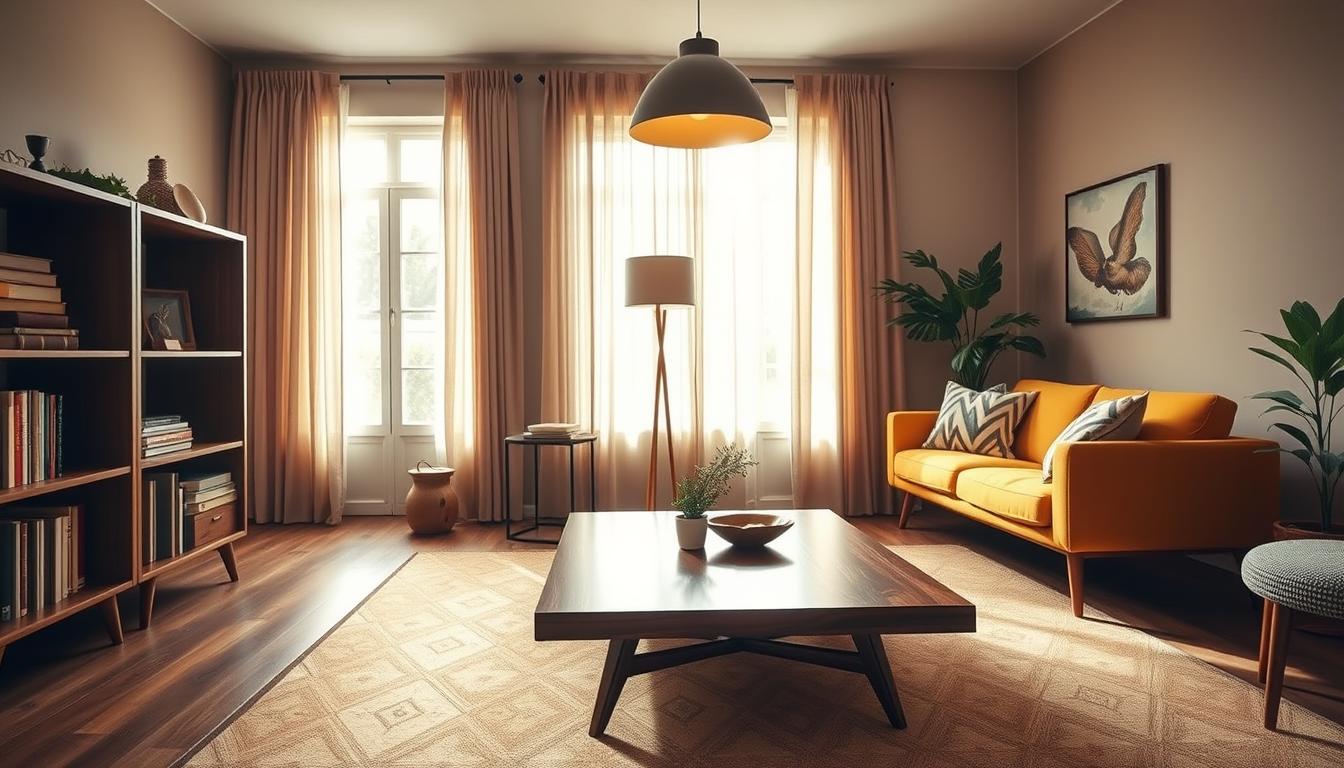
The 1950s was a big change for interior design, with the rise of mid-century modern style. This style is known for bright colors, clean lines, and natural shapes. It still shapes today’s home designs.
After World War II, people had more money. This led to the creation of famous pieces like the Eames Lounge Chair and Noguchi Coffee Table. These items became key parts of 1950s home interiors, showing a new level of modern and elegance.
We will look into how these styles came to be and their lasting effect on design today.
Key Takeaways
- The 1950s saw the emergence of mid-century modern design, characterized by clean lines and organic shapes.
- Post-war prosperity influenced interior design trends, introducing iconic furniture pieces.
- Mid-century modern style continues to inspire contemporary interior design.
- Vibrant and pastel hues were hallmark colors of 1950s interiors.
- Iconic furniture designs from the 1950s remain influential today.
Overview of 1950s Home Design Trends
The 1950s brought a big change in home decor, focusing on retro home decor and post-war design trends. Homes became more colorful and lively, showing the era’s optimism.
Key Characteristics of 1950s Home Interiors
The 1950s interiors were known for bold colors and new materials. The styles of American and Scandinavian design were big, shaping homes worldwide.
Some key features of 1950s interiors include:
- Bold color schemes that were both vibrant and pastel
- Innovative use of materials such as vinyl and laminate
- A growing emphasis on comfort and leisure, reflected in the design of furniture and layouts
Popular Color Palettes of the Decade
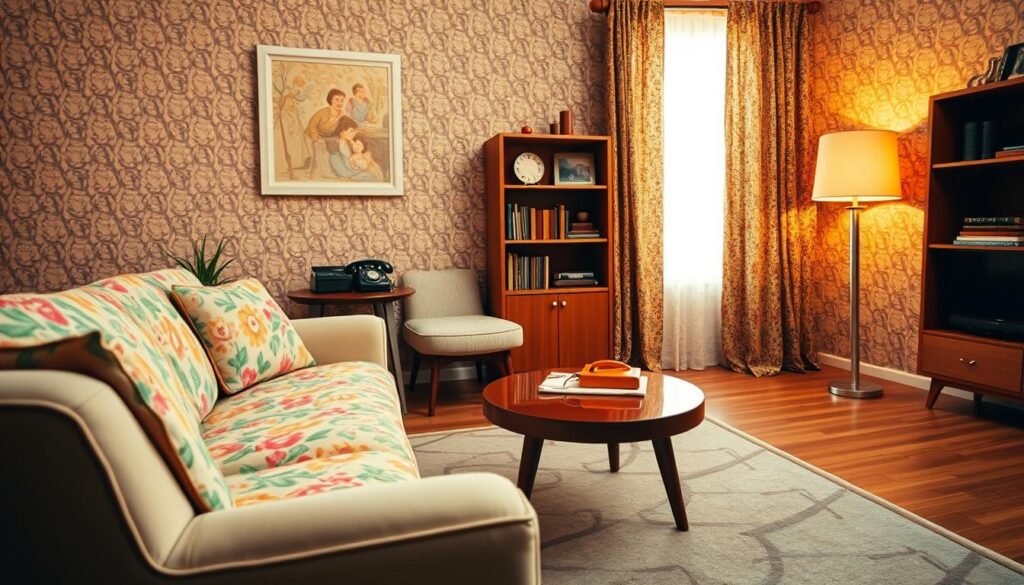
The 1950s were known for their bold and optimistic color palettes. They featured vibrant shades like teal, orange, and chartreuse, alongside softer pastel hues. These colors were used in various ways, from wall paint to furniture and accessories, creating a cohesive and stylish look that defined the era.
The use of color was not just about aesthetics; it was also about creating a certain mood or atmosphere. For instance, pastel colors were often used to create a calm and serene environment, while bold colors were used to add energy and vibrancy to a room.
Iconic Furniture Styles of the 1950s
In the 1950s, furniture design changed a lot. It started to focus on mid-century modern styles that are still loved today. This time was all about being simple, functional, and connected to nature.
Mid-Century Modern Design Elements
Mid-century modern design is known for its clean lines and simple shapes. Furniture from this time often had slender, straight legs or tapered peg legs. This made them look sleek and modern.
The Eames Lounge Chair and Noguchi Coffee Table are perfect examples. They show how mid-century modern design is both useful and stylish.
The Rise of Upholstered Furniture
In the 1950s, upholstered furniture like sofas and armchairs became very popular. They were made to be comfortable, with soft fabrics and designs that fit well. The upholstery often had bold colors and patterns, adding fun to rooms.
Unique Coffee Table Designs
Coffee tables in the 1950s were more than just tables. They were pieces that made a statement. The Noguchi Coffee Table, for example, is simple yet elegant. It became a common sight in many homes.
Other designs included glass tops, wooden bases, or metal frames. This variety allowed people to choose the style that fit their home best.
The Influence of Pop Culture on 1950s Interiors
Pop culture deeply influenced 1950s interiors. TV shows, music, and art left lasting marks on home decor. As the decade went on, these impacts grew stronger, changing how people decorated their homes.
TV Shows That Inspired Home Decor
Television’s rise in the 1950s greatly affected interior design. Shows like “I Love Lucy” and “Father Knows Best” showed off stylish homes. These homes had bold color schemes and modernist furniture, inspiring viewers to decorate their homes the same way.
For example, the sleek, modern look from 1950s TV shows helped start the trend of nostalgia-inspired home decor. This trend is still popular today.
Music and Art’s Role in Design Choices
Music and art were key in shaping 1950s interior design. The abstract expressionist art movement, led by artists like Jackson Pollock, inspired the use of abstract patterns and bold colors. Rock ‘n’ roll and youth culture also brought a vibrant, eclectic vibe to decorating.
Homeowners started adding elements inspired by their favorite artists and music to their decor. This created a unique mix of style and personality. The era also saw the introduction of new materials and textures, adding to the richness of 50s era interior design.
Materials and Textures Popular in the 1950s
The 1950s brought new materials and textures to home interiors. These changes defined the era’s style. Homes were now designed for durability, easy care, and beauty.
The Use of Vinyl and Laminate
Vinyl and laminate became key in 1950s homes. They were durable and easy to clean. Vinyl was used for upholstery, offering many colors and patterns. Laminate was great for countertops and furniture, offering a stylish, durable option.
Florence Knoll said, “New materials and tech let us make furniture that’s beautiful, functional, and lasts.” This idea was seen in the use of vinyl and laminate in homes.
Innovations in Textiles: From Cotton to Synthetic
The 1950s saw big changes in textiles. New synthetic fibers like nylon, polyester, and acrylic were developed. They were more durable and easier to care for than cotton. They also came in many textures and patterns, perfect for upholstery and drapery.
House Beautiful magazine said, “Synthetic fibers changed the game for homeowners. They brought practicality and style together.” Homeowners and designers loved these new textiles for their modern, stylish, and functional appeal.
The 1950s were a time of innovation in home decor. New materials and technologies shaped the era’s aesthetic. Their impact is still seen in today’s home decor.
The Kitchen: Heart of the 1950s Home
The kitchen in a 1950s home was more than a place to cook. It was the heart of the house. It was known for its bright colors, showing the era’s love for modernity and ease.
Appliances were a big deal in the 1950s kitchen. They were not just useful but also stylish. These classic appliances made a statement.
Classic Appliances That Define the Era
The 1950s were famous for their colorful appliances. Brands like Frigidaire and General Electric led the way. Their appliances became a key part of retro home decor.
| Appliance | Typical Color | Notable Feature |
|---|---|---|
| Refrigerator | Pastel Pink, Mint Green | Rounded edges, chrome handles |
| Stove | Avocado Green, Harvest Gold | Compact design, chrome accents |
| Dishwasher | White, matching kitchen cabinets | Integrated design, quiet operation |
Layout Trends: The Convenience of the Work Triangle
The 1950s brought the work triangle layout to kitchens. This layout, starting in the 1940s, became popular in the 1950s. It put the sink, stove, and fridge in a triangle for better efficiency and simplicity.
This layout made cooking easier and more fun. It made the kitchen a better place to be.
Living Rooms of the 1950s: Center Stage
Stepping into a 1950s living room feels like stepping into warmth and charm. This era saw living rooms become the heart of family life. They were cozy, inviting, and full of vintage interiors that were both useful and stylish.
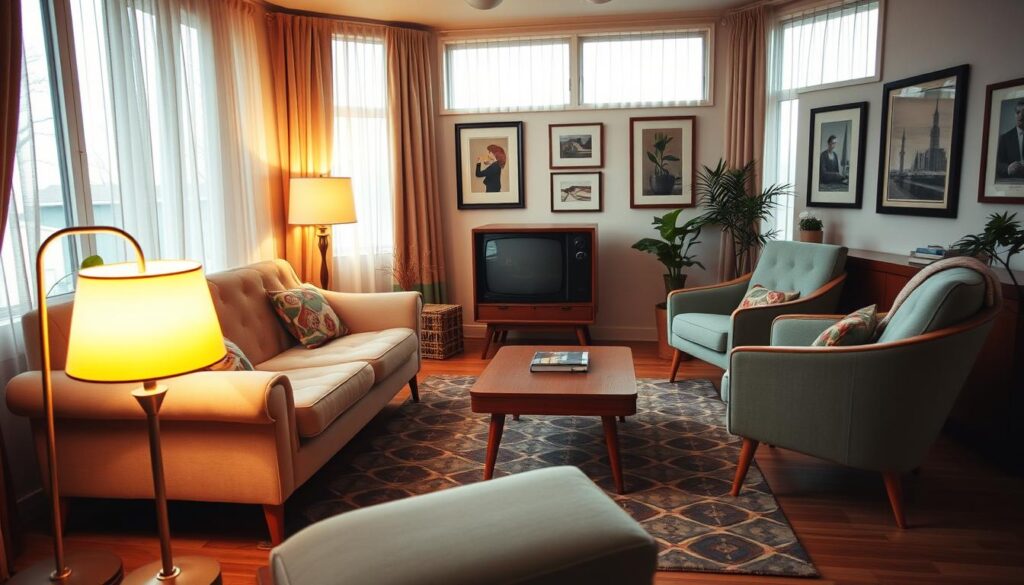
The 1950s focused on making homes more efficient. Living rooms were no exception. They were designed to be spacious and welcoming.
Design Layouts to Maximize Space
1950s living rooms used smart design to look bigger. Some key strategies included:
- Using furniture that could do more, like storage ottomans and coffee tables with hidden storage.
- Choosing 1950s style furniture that was simple yet elegant, like sofa beds and nesting tables.
- Arranging the room to flow well, making it feel more open.
For more on retro design, check out this article on 1960s home interior trends.
The Importance of Statement Lighting
Lighting was key in 1950s living rooms. It wasn’t just for light; it was a statement. Sputnik chandeliers were a big hit, adding glamour and sophistication.
Other lighting trends included:
- Globe lights and other round shapes for a playful vibe.
- Table lamps with unique shapes and materials.
- Floor lamps that were also decorative, often with abstract designs.
By combining smart layouts with eye-catching lighting, 1950s living rooms were both beautiful and practical.
Bedrooms with a 1950s Flair
The 1950s brought a calm and cozy vibe to bedrooms. This era focused on comfort and elegance, making bedrooms peaceful havens.
Ideal Color Schemes for a 1950s Bedroom
Bedrooms in the 1950s featured soft, calming colors. Pastel shades, gentle neutrals, and muted earth tones were common.
Here are some color schemes to try:
- Soft pink and cream
- Mint green and white
- Powder blue and beige
Furniture Arrangements for Comfort and Style
Furniture in 1950s bedrooms was all about comfort and style. Plush upholstery, elegant wooden pieces, and bold lighting fixtures were key.
To get a 1950s look, focus on:
- A comfy, standout bed with a wooden or upholstered headboard
- Dresser and nightstand sets with fancy hardware
- Cozy reading spots with plush armchairs and floor lamps
By adding these touches, you can make a bedroom that feels warm and elegant, just like the 1950s. It’s perfect for a nostalgia-inspired home decor theme.
Bathrooms: Functionality Meets Style
When we enter a 1950s bathroom, we see a mix of usefulness and timeless style. This time brought big changes in bathroom design. It focused on both being practical and looking good.
Retro Plumbing Fixtures and Features
The 1950s were famous for their unique plumbing fixtures. These added elegance and sophistication to bathrooms. Some key fixtures include:
- Sinks with pedestal basins
- Wall-mounted faucets
- Colored toilets and sinks
These fixtures were not just useful. They also showed off the homeowner’s style, making bathrooms stand out.
Tile Trends: Patterns and Colors
Tile design was key in 1950s bathroom looks. The decade saw more bold patterns and bright colors. These became symbols of the era’s design.
| Tile Type | Common Patterns | Popular Colors |
|---|---|---|
| Ceramic Tiles | Geometric patterns, Floral motifs | Pastel shades, Bright whites, Deep blacks |
| Mosaic Tiles | Abstract designs, Checkerboard patterns | Earth tones, Blues, Greens |
Using these tiles let homeowners make their bathrooms special. It made each space unique.
The Outdoor Aesthetic of 1950s Homes
After World War II, people started loving outdoor living more. They built cozy patios and gardens. This change brought a focus on outdoor furniture, landscaping, and decor that matched the era’s style.
Patio and Garden Design Ideas
The 1950s saw a push for both beauty and function in outdoor spaces. Homeowners chose simple designs and practicality. They liked:
- Open layouts that connected indoors and outdoors smoothly
- Using natural materials like stone and wood
- Adding bright colors with plants and decor
Popular Outdoor Furniture Styles
Outdoor furniture in the 1950s was all about being tough, comfy, and stylish. Some top styles were:
| Furniture Style | Characteristics |
|---|---|
| Wrought Iron | Intricate designs, durable, and often painted white |
| Teak | Weather-resistant, rich color, and natural texture |
| Wicker | Lightweight, woven design, and often used for chairs and sofas |
These furniture styles not only followed the era’s trends but also added to the retro home decor charm that many love today.
Incorporating 1950s Decor into Modern Homes
Adding vintage touches from the 1950s to your home can make it stand out. The era’s iconic styles, like mid-century modern, still inspire today’s decor. Mixing old and new can make your space feel both nostalgic and fresh.
Mixing Vintage and Contemporary Elements
To blend 1950s decor with today’s styles, pick a few vintage highlights. Think about iconic mid-century modern furniture, like an Eames lounge chair or a vintage coffee table. Then, add modern touches, like new lighting or sleek sofas, to balance it out.
Here are some tips for mixing vintage and contemporary elements:
- Begin with one or two vintage pieces and add modern decor around them.
- Use vintage items as accents, like throw pillows, rugs, or wall art.
- Combine different textures, like modern furniture with vintage wood.
Tips for Selecting Authentic 1950s Pieces
When choosing vintage items, look for authenticity. Seek pieces that are in good shape and show the 1950s design, like clean lines and organic shapes. Check out vintage stores, antique markets, or online sites that focus on vintage decor.
Some top 1950s pieces include:
- Mid-century modern sofas and armchairs with tapered legs.
- Vintage coffee tables from teak or other rich woods.
- Retro-inspired lighting, like sputnik chandeliers.
By adding these elements, you can make your modern home feel unique and stylish. It celebrates the 1950s while staying modern.
Conclusion: The Enduring Appeal of 1950s Interiors
The 1950s interior design era still fascinates many with its lasting charm. It shows the big impact of mid-century modern style on today’s design. Looking back, we see why 1950s style furniture and decor are still loved today.
Timeless Design Elements
The lasting charm of 1950s interiors comes from new materials and textiles. Vinyl and laminate, along with iconic furniture and bold lighting, are now part of modern decor. Today, people mix vintage and retro elements into their homes, showing the 1950s’ lasting influence.
Relevance in Modern Design
Looking ahead, the 1950s’ design trends will keep shaping modern interiors. By using 1950s style furniture and decor, homes can feel both nostalgic and modern. Understanding past design principles helps us create beautiful, functional homes for the future.