In the early 20th century, a new design movement emerged. It changed modern architecture and interior design forever. Founded in Germany by Walter Gropius, the Bauhaus movement combined art and industry. It focused on functionality, simplicity, and geometric abstraction.
Did you know that the Bauhaus style still shapes today’s design? This philosophy values clean lines, minimal decoration, and function over form. It leads to a modernist interior design that looks great and works well.
Key Takeaways
- Understand the core principles of Bauhaus-inspired interior design.
- Learn how to incorporate industrial materials into your space.
- Discover the importance of simplicity and minimalism in Bauhaus design.
- Explore how geometric shapes and primary colors can enhance your space.
- Find out how to apply Bauhaus principles to different rooms in your home.
Introduction to Bauhaus Style Interior Design
Bauhaus interior design comes from early 20th-century Germany. It mixes art and industry in a special way. Founded by Walter Gropius in 1919, the Bauhaus movement aimed to connect artistic expression with industrial production. This resulted in designs that are both stunning and practical.
What is Bauhaus Style?
Bauhaus style focuses on minimalist interior design. It removes unnecessary elements to show the design’s true essence. This is seen in clean lines, simple shapes, and a few colors, making spaces feel open and useful.
This style is not just about looks. It’s also about being functional. Bauhaus designers thought that form should follow function. This led to creating pieces that are both lovely and useful.
Key Characteristics of Bauhaus Design
Bauhaus design stands out for its use of industrial interior design elements. It uses materials like steel, glass, and concrete. This gives Bauhaus interiors a unique, modern look.
- Emphasis on functionality and simplicity
- Use of industrial materials and clean lines
- Limited color palette with an emphasis on primary colors
Understanding these core principles helps us see the beauty and simplicity of Bauhaus style. Whether you want a minimalist living space or industrial chic, Bauhaus style is full of inspiration.
The History of Bauhaus Movement
The Bauhaus movement started in early 20th century Germany. It was founded in 1919 in Weimar, Germany. The school was initially for art and crafts. But it soon became a big influence on design, focusing on functionalism.
Origins in Early 20th Century Germany
The Bauhaus movement was inspired by many art movements. It took ideas from De Stijl and Russian Constructivism. These influences helped create a unique style that was modern and practical.
Influential Figures in Bauhaus History
Many important people shaped the Bauhaus movement. Walter Gropius, László Moholy-Nagy, Marcel Breuer, and Wassily Kandinsky were key. Their work showed the movement’s focus on function and creativity.
| Influential Movement | Key Characteristics | Influence on Bauhaus |
|---|---|---|
| De Stijl | Primary colors, geometric abstraction | Use of bold colors and geometric forms |
| Russian Constructivism | Functionalism, industrial materials | Emphasis on functionality and use of modern materials |
The Bauhaus movement’s impact is still seen today. It shows how design can be both functional and beautiful. As we learn more about Bauhaus, we see how it still inspires design today.
Core Principles of Bauhaus Design
Bauhaus design focuses on making things simple and useful. It believes that the design should be based on what it does, not just how it looks. This leads to spaces that are both beautiful and practical.
Functionality Over Aesthetics
Bauhaus design puts functionality first. It uses clean lines and geometric shapes to make spaces look good and work well.
Walter Gropius, a key figure in Bauhaus, said, “Form follows function.” This quote shows the Bauhaus belief in making design useful.
“Form follows function.” – Walter Gropius
Integration of Art and Industry
The Bauhaus movement aimed to mix art and industry. It combined creative ideas with industrial methods. This mix led to designs that were both stunning and easy to use.
Using industrial materials and methods, Bauhaus designers made furniture and decor that were modern and functional.
- Embracing new materials and technologies
- Fostering collaboration between artists and manufacturers
- Producing designs that were both modern and functional
By following these principles, we can make spaces that reflect Bauhaus design. They should be simple, useful, and blend art and industry seamlessly.
Materials Commonly Used in Bauhaus Decor
Bauhaus decor focuses on materials that highlight industrial production and modern manufacturing. Designers chose materials like steel, glass, and concrete. These choices show the movement’s link to industrial and modern techniques.
Embracing Industrial Materials
Bauhaus designers were early adopters of industrial materials. Steel was a top pick for its strength and versatility. It helped create furniture that was both useful and beautiful.
Marcel Breuer’s Wassily Chair is a prime example. It’s made from tubular steel and shows how Bauhaus combined innovative furniture with timeless design.
Glass was another key material for Bauhaus designers. They loved it for its transparency and light-bringing qualities. Glass was used in partitions, tables, and decorations to make spaces feel open and fluid.
To see how to bring these elements into your home, check out this page for stylish interior design ideas.
The Role of Color and Texture
Color and texture were just as important as materials in Bauhaus design. Designers used a bold yet balanced color palette. They often chose primary colors alongside neutral tones.
This color approach gave Bauhaus interiors a unique look. They were both lively and calm at the same time.
Texture added depth to Bauhaus spaces. Designers mixed smooth surfaces like glass and steel with rougher textures like woven fabrics or untreated wood. This mix made spaces visually appealing and engaging to touch.
This combination of textures and colors made interiors not just beautiful but also rich in sensory experience.
How to Incorporate Bauhaus Style in Your Home
Creating a Bauhaus-inspired interior is more than picking furniture. It’s about making a space that looks good and works well. To do this, we must understand the key elements of Bauhaus style.
Choosing Essential Furnishings
When furnishing your home in Bauhaus style, focus on pieces that are both useful and simple. Look for furniture with clean lines, simple shapes, and a focus on function. For example, a Marcel Breuer’s Wassily Chair is a classic Bauhaus piece. You can also find modern Bauhaus designs at stores that specialize in Bauhaus-inspired interior design.
Some key furnishings to think about include:
- Simple, geometric coffee and side tables
- Chairs and sofas with clean lines and little upholstery
- Lighting that serves as both function and decoration
Color Palettes That Reflect Bauhaus
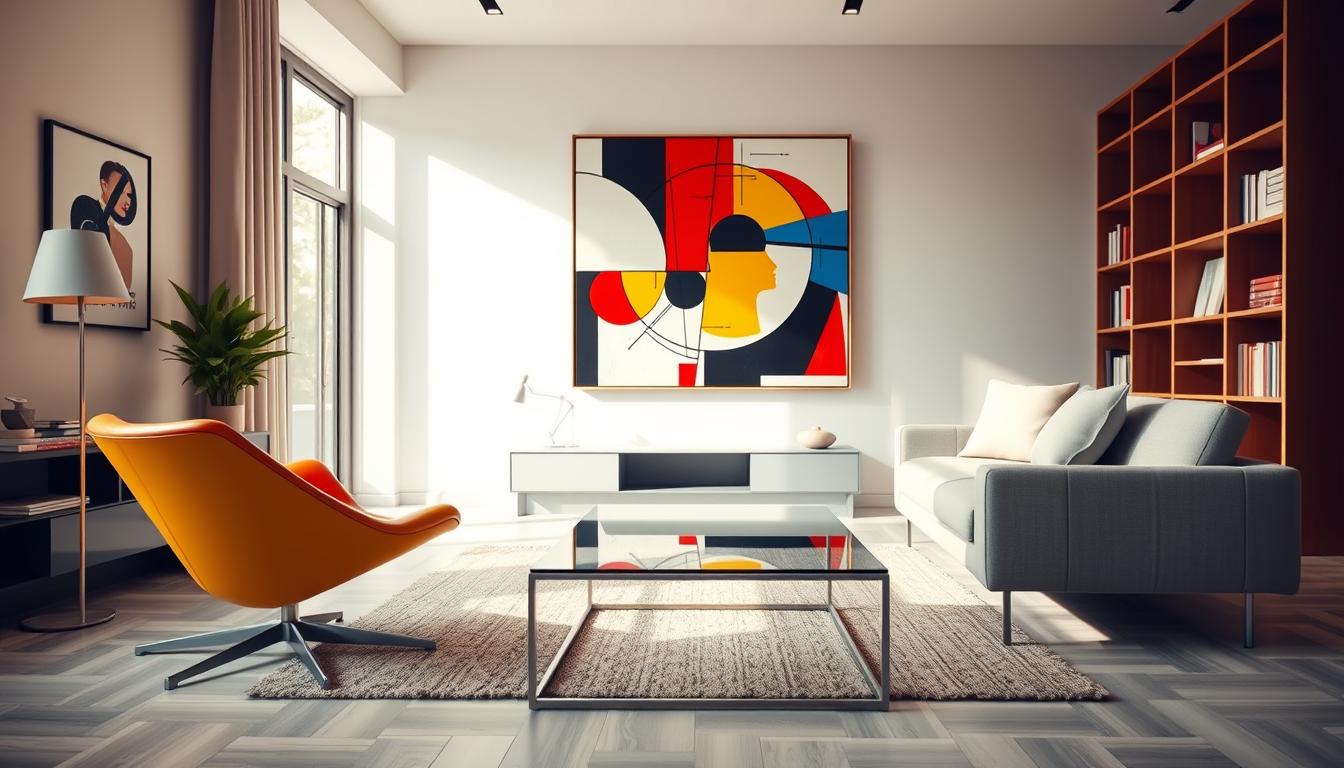
Bauhaus style is known for bold colors, but it also favors a neutral palette. Start with neutral colors like white, black, and gray. Then, add primary colors like red, blue, and yellow through accent pieces.
A typical Bauhaus color scheme might include:
- A neutral color for walls and big furniture
- Primary colors for accent pieces
- Earth tones like beige and brown for warmth
By balancing form and function and choosing the right furnishings and colors, you can create a Bauhaus-inspired interior. For more ideas and help, check out resources on Bauhaus style interior design and minimalist interior design.
Bauhaus Style Furniture
Bauhaus furniture is a perfect mix of beauty and usefulness. This design movement started in the early 1900s and still shapes today’s interior design. We’ll look at the key pieces that make up Bauhaus style and how they impact modern furniture.
Iconic Furniture Pieces
Bauhaus designers made furniture that looked good and worked well. Marcel Breuer’s Wassily Chair is a famous example, using tubular steel. Ludwig Mies van der Rohe’s Barcelona Chair and Marcel Breuer’s cantilevered chairs are also well-known.
These pieces show the Bauhaus focus on simplicity, usefulness, and creative material use. For example, the Wassily Chair combines leather straps and tubular steel for a strong yet light chair.
Modern Reproductions of Bauhaus Designs
Today, many Bauhaus designs are still made, either as exact copies or with a modern twist. Modern versions keep the original design’s spirit but use new materials and methods. This way, Bauhaus style stays relevant in today’s homes.
The Wassily Chair is still popular, and its design has inspired many new versions. The Barcelona Chair also remains a key piece in luxury interior design today.
| Iconic Piece | Designer | Key Features |
|---|---|---|
| Wassily Chair | Marcel Breuer | Tubular steel, leather straps |
| Barcelona Chair | Ludwig Mies van der Rohe | Chrome frame, leather upholstery |
| Cantilevered Chair | Marcel Breuer, Mart Stam | Curved steel frame, leather or fabric seat |
Adding these iconic pieces or their modern versions to our homes brings a stylish and practical touch. Bauhaus style’s influence is clear in many modern designs, showing the lasting impact of the Bauhaus movement.
Lighting in Bauhaus Interior Design
In Bauhaus interior design, lighting is more than just a need. It’s a key element that shows the movement’s focus on functionalism and simplicity. The right lighting can change a room’s feel and use, making it essential for a true Bauhaus look.
Bauhaus design often uses simple, geometric shapes and materials like metal and glass for lights. These features not only light up the space well but also make it look good.
Types of Lighting Fixtures
Bauhaus-inspired lights come in many forms, from pendant lights to table lamps. They share some key traits:
- They have simple, geometric shapes that show the movement’s love for clean lines and less decoration.
- They use industrial materials like metal and glass, which make them both useful and attractive.
- They focus on being useful, making sure light is not just for show but also needed in the space.
The Importance of Natural Light
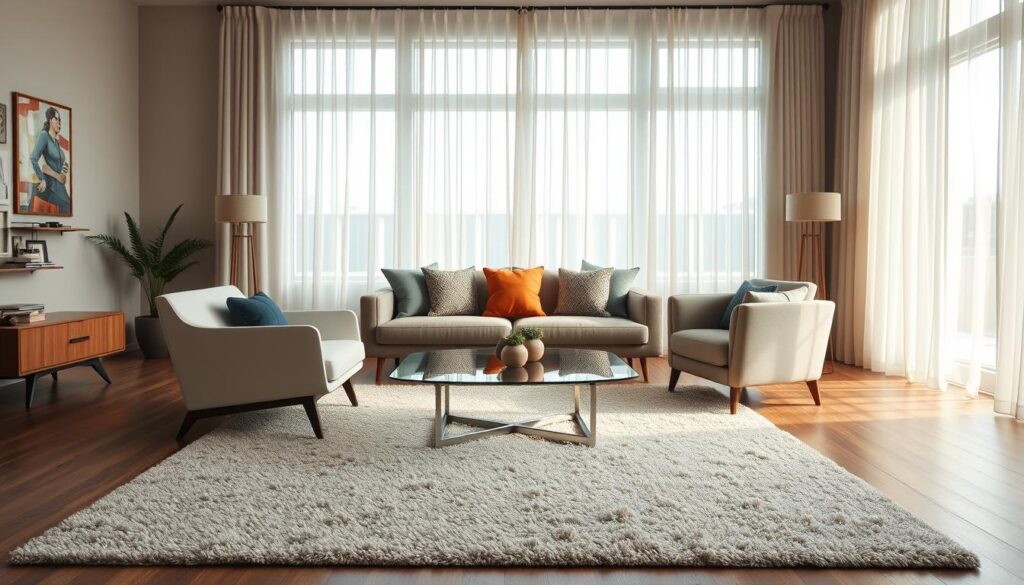
Natural light is also key in Bauhaus interior design. Big windows and mirrors help bring in more light, making spaces feel brighter and more inviting.
To make our Bauhaus-inspired spaces brighter, we can:
- Use sheer curtains or blinds to let sunlight in while keeping things private.
- Add reflective surfaces like mirrors or metallic finishes to spread light around.
- Keep things tidy and use light colors on walls and floors to reflect natural light.
By mixing good artificial lighting with a focus on natural light, we can make a Bauhaus-inspired space that’s both useful and beautiful.
Spatial Arrangement and Layout
A well-designed space is key in Bauhaus-inspired interiors. It brings a sense of openness and fluidity. The use of clean lines and innovative furniture enhances both looks and function.
Bauhaus design loves open plan living. It uses fewer walls to make spaces feel connected. This creates a smooth flow between areas.
Open Plan Living Inspired by Bauhaus
Open plan living is a big part of Bauhaus design. It makes moving between areas easy. This style also encourages a sense of community.
Ludwig Mies van der Rohe believed in “Less is more.” Bauhaus interiors show this with their open layouts. They remove walls to make spaces feel bigger and airier.
Functional Spaces for Everyday Use
Bauhaus design also focuses on practical spaces. It uses innovative furniture and smart storage. These elements are both useful and stylish.
- Multifunctional furniture pieces that serve more than one purpose.
- Efficient storage solutions that maintain the clean lines and minimal aesthetic of Bauhaus design.
- Carefully planned layouts that facilitate easy movement and interaction within the space.
By combining these elements, Bauhaus interiors find a balance. They create spaces that are both beautiful and practical.
Bauhaus Colors and Patterns
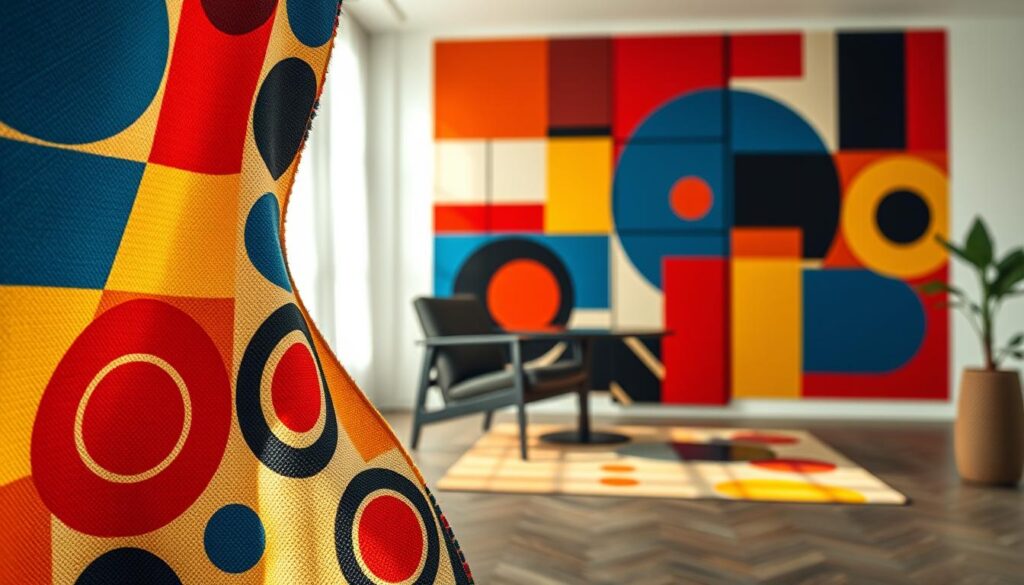
Bauhaus design is loved for its careful use of color and geometric patterns. It focuses on simplicity and function. This is seen in its color choices and patterns, which are both beautiful and simple.
Typical Color Schemes in Bauhaus
Bauhaus interiors often use a neutral color palette with bold primary colors. These colors, like red, blue, and yellow, bring energy to a space. Neutral tones like white, black, and gray balance out the bold colors, keeping things calm.
Color in Bauhaus design is more than looks. It’s about creating a space that works well and looks good. By mixing bold colors with neutral backgrounds, designers created a unique look that’s both modern and timeless.
Using Patterns Effectively
Geometric patterns are key in Bauhaus design. Shapes like triangles, circles, and squares add depth and interest. When using patterns, it’s important to find a balance between bold and subtle.
To use patterns well, start with small items like rugs, throw pillows, or wall art. This lets you add pattern without overwhelming the space. Mixing patterns can add depth, but keep the colors consistent to avoid chaos.
By carefully choosing colors and patterns, you can create a Bauhaus-inspired space. It can be bold or elegant, depending on what you want. Bauhaus design offers endless inspiration for your home.
Transforming Small Spaces with Bauhaus Style
Small spaces can greatly benefit from Bauhaus-inspired interior design. This style focuses on clean lines and minimal ornamentation. It helps create a sense of openness and efficiency in even the most compact areas.
Maximizing Space with Smart Design
Functionality is a core principle of Bauhaus design. In small spaces, this means choosing furniture that does more than one thing. It also means getting rid of clutter we don’t need.
For example, a storage ottoman can be both a seat and a place to store things. A wall-mounted desk provides a workspace without taking up floor space. These choices help make a room feel more open and spacious.
It’s also important to think about the size of furniture. Big pieces can make a small room feel cramped. Instead, choose furniture that fits well in the space. This makes the room look better and makes it easier to move around.
Vertical Spaces and Minimalism
Using vertical spaces is another smart way to make small areas feel bigger. Tall shelving units or storage systems keep floors and surfaces clear. This makes the room feel more open.
Minimalism is also key in Bauhaus design, and it’s great for small spaces. By having fewer decorative items, we keep things clean and uncluttered. This makes the room look better and feel more peaceful.
In conclusion, making small spaces look good with Bauhaus style takes careful thought. It’s all about functionality and minimalism. By following these principles, we can make even the smallest areas look efficient, beautiful, and spacious.
Cost-Effective Ways to Achieve Bauhaus Aesthetics
Getting a Bauhaus look doesn’t have to cost a lot. You can do it with DIY projects and smart shopping. The style focuses on industrial interior design and functionalism. You can follow these ideas without spending too much.
Let’s look at some DIY ideas for a Bauhaus look. One easy way is to use old industrial materials. For instance, you can turn metal pipes into cool lights or shelves.
DIY Ideas for a Bauhaus Look
Here are some DIY projects to try:
- Repurpose old industrial materials like metal pipes and wooden crates.
- Create your own Bauhaus-inspired artwork using geometric shapes and bold colors.
- Upcycle old furniture with a fresh coat of paint or new hardware.
Where to Shop for Affordable Pieces
If DIY isn’t your thing, there are many affordable places to find Bauhaus-inspired items. Here are some options:
| Store | Price Range | Notable Items |
|---|---|---|
| IKEA | $10-$500 | Minimalist furniture, industrial decor |
| Target | $20-$200 | Geometric patterned rugs, modern lighting |
| Thrift Stores | $5-$50 | Unique, one-of-a-kind industrial pieces |
By shopping smart and getting creative with DIY, you can get a Bauhaus look. It’s stylish, functional, and won’t break the bank.
Conclusion: Embrace the Bauhaus Legacy in Your Home
The Bauhaus movement is all about simplicity, functionality, and industrial materials. It still shapes today’s interior design. This style offers a timeless way to make spaces that look good and work well.
Designing with Bauhaus Style
Using geometric shapes and clean lines can make your space modern and Bauhaus-inspired. This style is more than looks. It’s about making spaces that improve your daily life.
Exploring Bauhaus Further
Keep exploring Bauhaus style by trying out different materials and textures. The secret to adding Bauhaus touches to your home is to mix form and function. This creates a space that is both welcoming and reflects today’s design trends.