The Victorian era lasted from the 1830s to the early 1900s. It was a time of big changes and luxury. Today, you can still see the Victorian style in many Victorian-inspired interiors.
We’ll show you how to make your home look better with timeless Victorian design elements and decor. Adding these classic styles can make your home look sophisticated and elegant.
Key Takeaways
- Understanding the core elements of Victorian design
- Tips for incorporating Victorian decor into your space
- How to balance opulence with modern functionality
- Creating a cohesive Victorian-inspired aesthetic
- Common mistakes to avoid when designing a Victorian-inspired interior
Understanding Victorian Home Aesthetics
The Victorian style is a mix of Gothic Revival, Italianate, and Second Empire. This mix made homes look stunning and showed the values of the time.
Key Characteristics of Victorian Architecture
Victorian homes had high ceilings, large windows, and detailed designs. These features made them feel grand and spacious.
Some key features include:
- Ornate woodwork and intricate moldings
- Turreted roofs and asymmetrical facades
- Stained glass windows and decorative trimmings
The Role of Colors and Patterns in Design
Colors and patterns were key in Victorian design. They added depth and interest to rooms. Rich jewel tones and bold patterns were used in furniture, wallpaper, and textiles.
Exterior facades were also painted in many colors. Contrasting trim highlighted architectural details.
Essential Elements of Victorian Interior Design
To create a Victorian-inspired home, you need to know the key elements. Victorian design is all about luxury and grandeur. It uses historical furniture, rich fabrics, and detailed patterns.
Historical Furniture Styles
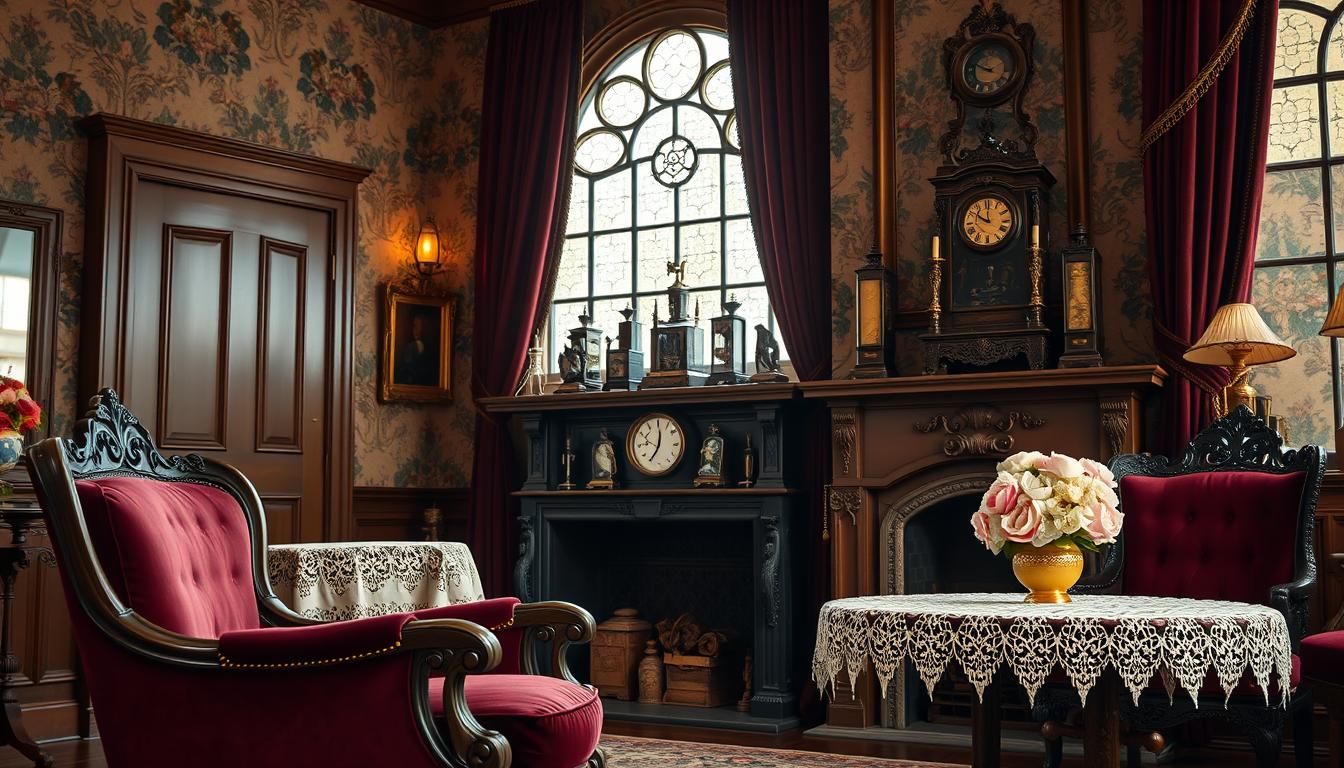
Victorian furniture often has dark stained wood and intricately carved details. These add depth and character to any room. For example, Victorian-era sofas and armchairs are both functional and decorative.
The use of velvet or needlepoint fabric makes these pieces even more luxurious.
| Furniture Style | Characteristics | Common Materials |
|---|---|---|
| Victorian Sofas | Ornate carvings, tufted upholstery | Mahogany, Velvet |
| Armchairs | Intricate details, curved lines | Oak, Embroidered fabric |
| Coffee Tables | Carved legs, ornate details | Walnut, Marble |
Importance of Fabrics and Textiles
Fabrics and textiles are key in Victorian design. Velvet, silk, and brocades are often used for upholstery and drapery. They add texture and depth, making the room feel luxurious.
By using these elements, you can create a Victorian-inspired space. It will be elegant and welcoming. Embrace the luxury and grandeur of this iconic design era.
Incorporating Victorian Colors into Your Home
Adding Victorian colors to your home is more than picking the right shades. It’s about bringing the elegance and style of the Victorian era into your space. To get the look right, you need to know the color schemes of that time.
Victorian homes were known for their vibrant colors and lots of natural light. Colors were not just for looks; they also showed off the owner’s status and taste.
Palettes That Define the Era
The Victorian era loved deep, rich colors that warmed up rooms. Some key palettes include:
- Rich jewel tones such as emerald green and sapphire blue
- Warm, earthy tones like terracotta and sienna
- Soft pastels, which were used to create a softer, more delicate atmosphere
For more ideas on Victorian decor, check out elegant Victorian home decor ideas. They show off the classic beauty of these colors.
Accent Walls and Their Impact
Accent walls were big in Victorian homes. They added a splash of color and made rooms more interesting. By picking a bold color for one wall, you could highlight a room’s best features.
When adding an accent wall, think about the whole color scheme and what you want to achieve. A well-picked accent wall can make a room feel more lively and welcoming.
To balance out a bold accent wall, choose colors for the other walls and decor that complement it. This balance is crucial for a cozy and inviting home atmosphere.
Choosing the Right Furniture for a Victorian Look
To get the Victorian look right, picking the right furniture is key. The Victorian era, from the late 1830s to the early 1900s, loved opulence and detailed designs in furniture.
Furniture from this time often had dark wood like mahogany and oak. It also had intricate carvings. These features are vital for a true Victorian feel in your home.
Types of Furniture: A Focus on Mahogany and Oak
Mahogany and oak were top choices for Victorian furniture. Mahogany, with its deep, reddish-brown hue, was used for big items like wardrobes and dining tables. Oak, known for its strength, was used for chairs, beds, and more.
- Mahogany Furniture: Loved for its beauty and lasting quality, mahogany was a go-to for Victorian makers. It was used for detailed carvings and fancy designs.
- Oak Furniture: Oak was chosen for its toughness. It was often picked for furniture that needed to be sturdy, like chairs and tables.
The Importance of Antiques
Adding antiques to your Victorian-style home brings authenticity and charm. Antique furniture, from the Victorian era, is a big investment but adds a special touch.
When picking antiques, look for pieces that show off the era’s craftsmanship. Look for intricate carvings, detailed upholstery, and high-quality materials. These are signs of true Victorian furniture.
- Check the piece for signs of age and wear to make sure it’s from the era.
- Look for the quality of craftsmanship, with detailed work and solid build.
- Learn about the piece’s history and where it came from.
By choosing the right furniture and adding antiques, you can make a Victorian-inspired home that’s both elegant and rich in history.
Lighting to Enhance Your Victorian Home
To truly elevate your Victorian home, consider the impact of lighting. Lighting fixtures in Victorian interiors are not just functional; they are also decorative elements that add to the overall aesthetic of the space.
Types of Lighting Fixtures
Victorian homes often feature a variety of lighting fixtures, each contributing to the unique character of the interior. Some popular types include:
- Chandeliers: Grand and elaborate, chandeliers are a hallmark of Victorian decor.
- Sconces: Wall-mounted sconces provide both light and decoration.
- Lanterns: Hanging lanterns add a touch of elegance and can be used in various rooms.
These fixtures not only illuminate the space but also serve as decorative pieces that enhance the victorian home interior.
Using Chandeliers for Drama
Chandeliers are a staple in Victorian homes, adding drama and sophistication to any room. To incorporate chandeliers effectively:
- Choose a chandelier that complements the scale of your room.
- Consider the style and material of the chandelier to ensure it matches your vintage home design.
- Install dimmers to control the lighting and create different ambiance.
By thoughtfully selecting and placing lighting fixtures, you can significantly enhance the beauty and authenticity of your Victorian home. This makes it a true reflection of victorian decor.
Decorative Touches for a Victorian Interior
To make a Victorian interior, you need to add decorative touches that show the era’s luxury and style. The Victorian era loved grandeur and detailed designs. You can get this look by choosing the right accessories and textiles.
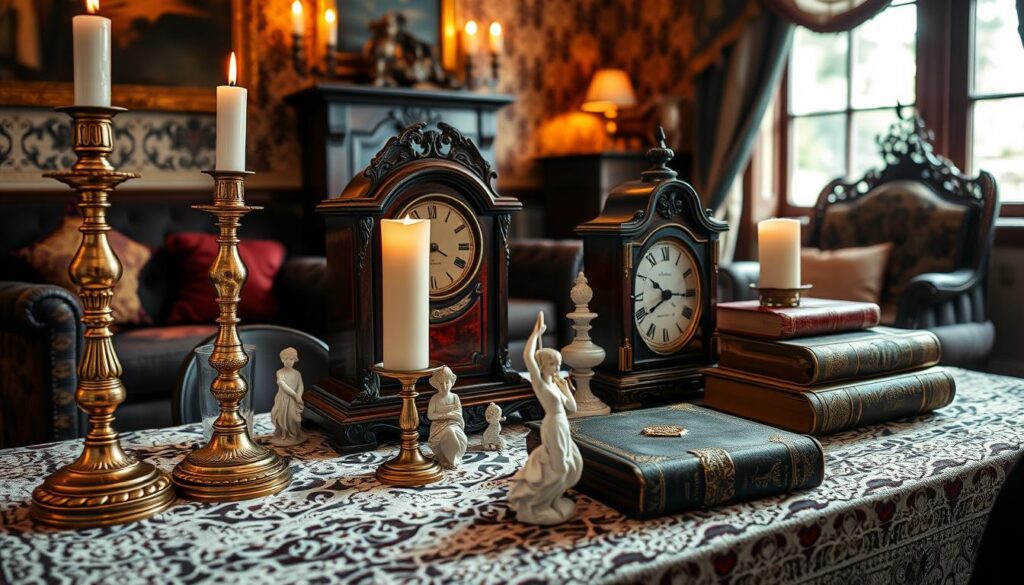
Accessories are key in making a Victorian-inspired home look right. Frames and mirrors are very important. “A well-placed mirror can add depth and light to a room, while ornate frames can enhance the beauty of artwork and photographs,” say interior design experts.
The Power of Accessories: Frames and Mirrors
Frames and mirrors in Victorian homes were more than just useful; they were also decorative pieces that showed off craftsmanship. To get a Victorian look, use gold-leaf frames or mirrors with intricate carvings. These can make your space feel luxurious.
When picking frames, look for ones with fancy details and think about gilded or carved designs. For mirrors, choose ones with fancy surrounds or etched glass. These accessories help make your home look Victorian.
Rugs and Carpets that Complete the Look
Rugs and carpets were key in Victorian interiors, adding warmth, texture, and color. They often had detailed patterns and designs. To get this look, pick rugs and carpets with rich, bold patterns and materials like wool or silk for their luxury feel.
When picking a rug or carpet for a Victorian-inspired room, think about the color palette and the look you want. Deep reds, rich blues, and detailed florals were common in the era. The right rug or carpet can make your room feel welcoming and complete.
As design historians say, “The right rug can be the finishing touch that makes a room special.” By adding these decorative elements, you can bring the elegance and charm of the Victorian era into your home.
Walls and Ceilings: Making a Statement
Renovating a Victorian home is all about making a statement. Walls and ceilings play a big role in this. They capture the essence of Victorian architecture and change a room’s feel. The right treatments and designs add depth, character, and elegance.
Wall Treatments: From Wallpaper to Wood Paneling
Wall treatments in Victorian homes are known for their beauty and complexity. Wallpaper was a key feature, with intricate patterns that added sophistication. For a true Victorian look, choose wallpaper that’s historically accurate.
Wood paneling was also popular, bringing warmth and grandeur. It can be a striking feature wall or cover an entire room, depending on your vision.
Ceiling Designs: Styles to Emulate
Ceiling designs in Victorian homes are like art, with moldings, cornices, and rose centers. To get this look, add moldings and a chandelier or pendant light. A coffered ceiling can also add depth and interest.
By focusing on walls and ceilings, you can create a Victorian experience at home. Use elaborate wallpaper, wood paneling, or ornate ceiling designs. These elements will make a lasting statement.
Incorporating Modern Comforts into Victorian Spaces
Adding modern comforts to Victorian homes needs careful thought. We must keep their charm while making them more comfortable. It’s all about finding a balance.
Balancing Tradition with Modern Convenience
To mix old and new well, follow these steps:
- Look at the home’s layout to see where new things can fit.
- Pick modern items that match the Victorian look.
- Keep the original parts as is, making them shine again.
For example, adding smart home tech can make a Victorian home better without changing how it looks. Smart thermostats and lights can be controlled from afar. This adds convenience without losing the classic feel.
Tips for Streamlined Technology Integration
Adding tech to a Victorian home needs planning to keep it looking good. Here’s how to do it right:
| Technology | Integration Tip |
|---|---|
| Smart Lighting | Use hidden sensors and switches to keep the look. |
| Home Entertainment | Hide screens and speakers in old furniture or custom cases. |
| Heating and Cooling | Choose systems that don’t take up much space, like underfloor heating. |
By using these tips, you can have both Victorian charm and modern tech. It’s the best of both worlds.
Creating an Inviting Victorian Space
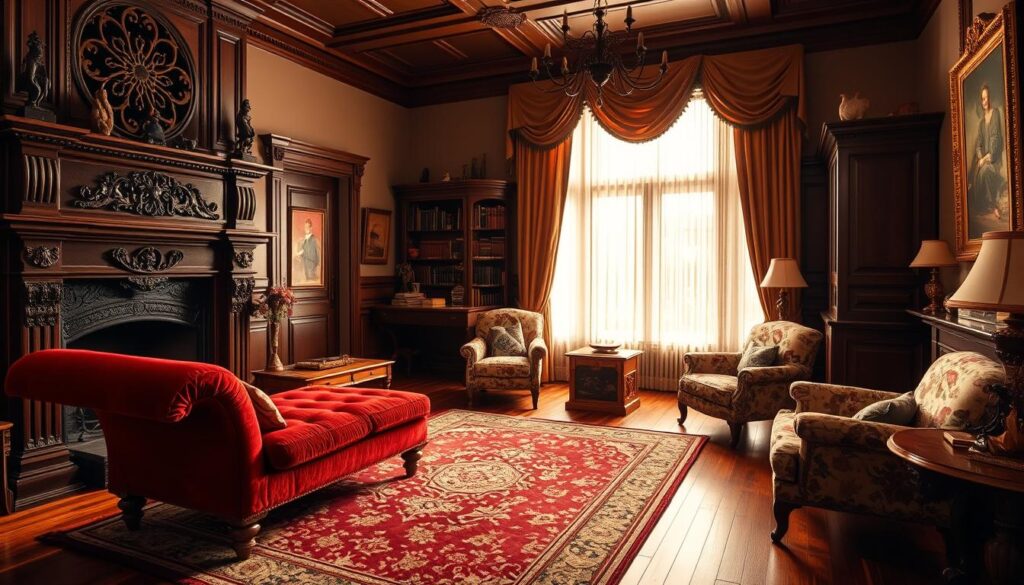
To capture the essence of Victorian decor, focus on creating cozy, welcoming spaces. These spaces should reflect the era’s love for detail and luxury. Victorian interiors often feature elegant living rooms with cozy nooks and inviting spaces.
One key element in creating an inviting Victorian space is the living room layout. A well-planned layout can make a big difference in how welcoming and comfortable your home feels.
Living Room Layout Ideas
When designing your living room, consider these layout ideas for a Victorian-inspired look:
- Use a focal point, such as a fireplace or a stunning piece of furniture, to anchor the room.
- Incorporate plush furnishings, like velvet sofas and armchairs, to add depth and comfort.
- Arrange seating in a way that encourages conversation and creates cozy nooks.
A well-designed living room layout not only enhances your home’s aesthetic appeal. It also makes it more functional and inviting.
Designing Cozy Nooks
Cozy nooks are a hallmark of Victorian interiors. They provide intimate spaces for reading, relaxation, and contemplation. To create a cozy nook, consider the following:
- Choose a quiet corner or a spot with a pleasant view.
- Use comfortable seating, such as a plush armchair or a chaise lounge.
- Add layers of textiles, like throw blankets, pillows, and rugs, to enhance warmth and texture.
Here’s a comparison of different textiles you can use to add warmth and coziness to your nooks:
| Textile | Description | Benefits |
|---|---|---|
| Velvet | Luxurious fabric with a soft, plush pile. | Adds depth and luxury to your space. |
| Wool | Natural fiber that provides warmth. | Excellent for colder climates, durable. |
| Cotton | Breathable, versatile fabric. | Easy to clean, suitable for a variety of decor styles. |
By incorporating these elements, you can create a Victorian-inspired living room that is both elegant and inviting.
Gardens and Outdoor Spaces: A Victorian Influence
Gardens and outdoor spaces were key parts of Victorian homes. They were like extra rooms, showing off the homeowner’s style. The Victorian era loved nature and fancy designs, which is seen in their gardens. These gardens had detailed patterns, lots of green, and bright flowers.
English Garden Style for Homes
The English garden style was big during the Victorian era. It’s all about looking natural and laid-back. It uses local plants, winding paths, and simple garden features. To get this look, think about these things:
- Native Plants: Pick plants that grow well in your area. They need less care.
- Meandering Paths: Use stone or gravel for paths. This makes exploring fun.
- Rustic Features: Add wooden benches, old stone walls, or old garden decorations.
For more ideas on Victorian-style gardens, check out Homes and Gardens. They have great tips on garden design.
Outdoor Furniture Options
Outdoor furniture was important in Victorian gardens. Cast-iron benches and fancy tables were favorites. When picking furniture for your garden, look for pieces that show off the era’s love for detail and lasting quality.
- Cast-Iron Furniture: It’s strong and has cool designs, making it perfect for Victorian gardens.
- Teak or Oak Wood Furniture: These woods don’t rot or get eaten by bugs, great for outside.
- Wicker or Rattan Furniture: For something more delicate, try wicker or rattan. They were also loved back then.
By adding these touches, you can make a lovely outdoor area. It will show off the beauty and charm of the Victorian era.
Maintaining Your Victorian Home’s Integrity
Keeping your Victorian home in top shape is key to its charm. These homes are famous for their detailed designs and ornate features. It’s important to preserve these to keep their beauty intact.
To do this, knowing the right preservation methods is crucial. One main approach is to use materials that match the original construction as much as possible. This also means using traditional craftsmanship for any repairs or replacements.
Preservation Techniques
Some effective preservation techniques include:
- Restoring original features such as moldings, cornices, and woodwork.
- Using period-correct materials for any repairs or replacements.
- Maintaining the original layout and design of the home.
For example, when restoring a Victorian home, it’s vital to keep the original woodwork intact. This might involve removing old paint, fixing damaged areas, and applying a new finish that matches the original closely.
When to Consult a Professional
While homeowners can handle some preservation tasks, others need a pro’s touch. Knowing when to ask for help is crucial to avoid harming the home’s integrity.
| Task | DIY Feasible | Professional Required |
|---|---|---|
| Restoring Original Woodwork | Yes | No |
| Complex Structural Repairs | No | Yes |
| Repainting with Period-Correct Colors | Yes | Yes (for color matching) |
By knowing when to call in a professional, homeowners can ensure their Victorian home is preserved right. This keeps its historical value and beauty intact.
Bringing Your Vision to Life
As we wrap up our journey into Victorian-inspired interiors, it’s time to make your dream a reality. Creating a Victorian home interior is more than just looks. It’s about making a space that shows off your personality and style.
Budgeting for Your Makeover
To bring your Victorian decor to life, you need to budget carefully. First, decide what’s most important to you, like authentic Victorian design or period-specific furniture. Then, plan your budget and think about using or fixing up old pieces to save money.
Finding Inspiration and Resources
For inspiration, check out historical homes, design magazines, and online sites. Visit antique stores and talk to experts to find real Victorian-era items. Online shops and local antique sellers are also great for finding Victorian decor and design elements.
With smart budgeting and the right inspiration, you can make a Victorian home interior that’s both stunning and practical. These tips will help you create a space that captures the elegance and charm of the Victorian era.