The Craftsman style decor is back in style. It focuses on the beauty of handcrafted details and the warmth of natural materials in home design.
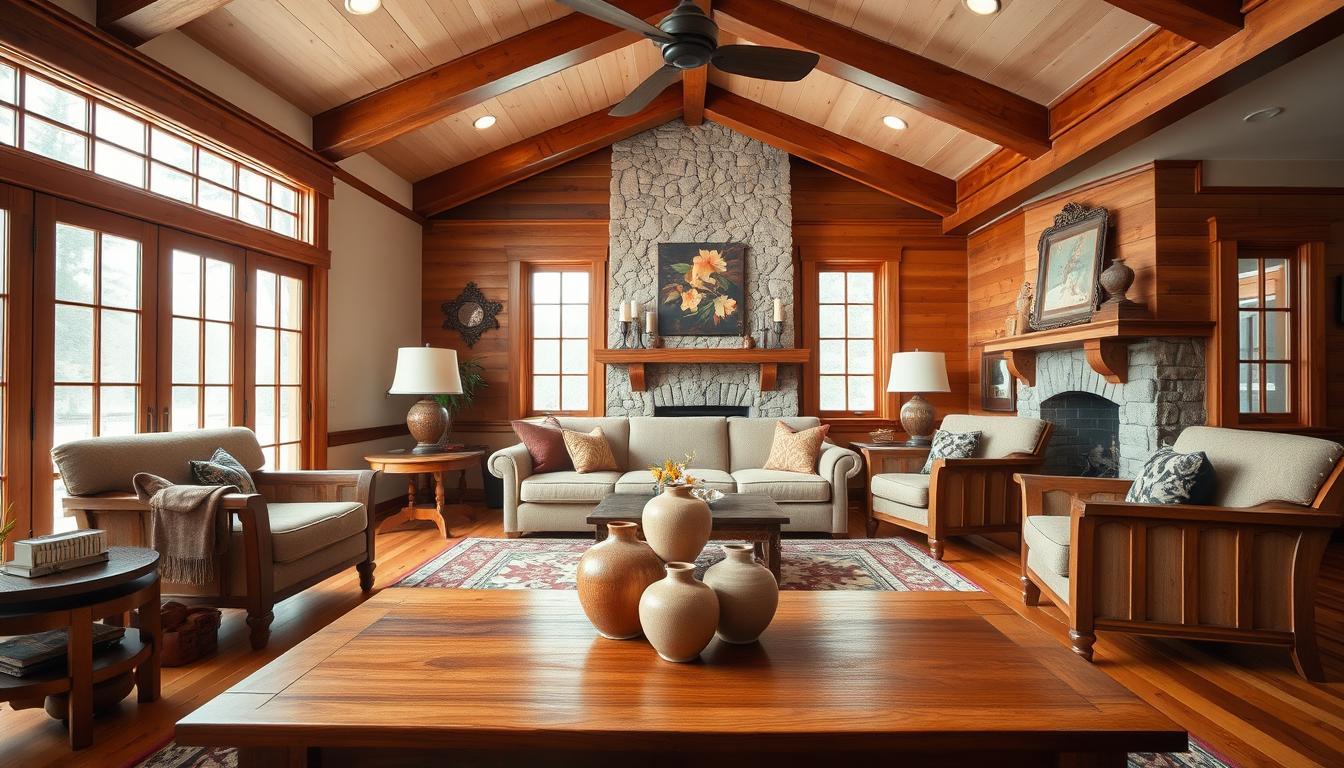
This style combines old-school craftsmanship with new touches. It creates a look that’s both old and new. Features like exposed beams, decorative trusses, and handcrafted woodwork are key. They make Craftsman style a favorite for adding warmth and character to homes.
Key Takeaways
- Blend traditional Craftsman elements with modern decor for a unique aesthetic.
- Incorporate natural materials and handcrafted details for warmth and character.
- Exposed beams and decorative trusses are hallmark features of Craftsman style.
- Use handcrafted woodwork to add a touch of craftsmanship to your space.
- Balance nostalgia with contemporary elements for a fresh look.
Introduction to Craftsman Home Interiors
The Craftsman home interior design comes from the Arts and Crafts movement. It values craftsmanship and connects with nature. It was a response to the early 20th century’s industrialization, celebrating handmade beauty and natural warmth.
The Craftsman style focuses on handcrafted details like woodwork and built-in cabinetry. These elements show the homeowner’s love for quality craftsmanship. Understanding the history and aesthetic of this style is key when exploring interior design ideas for craftsman homes.
Craftsman homes have open floor plans, which were groundbreaking. These spaces foster community and togetherness, perfect for family life. Natural materials like wood, stone, and brick add warmth and texture, making the space cozy and welcoming.
Designing a Craftsman home interior requires balancing modern needs with historical integrity. By mixing traditional craftsmanship with modern comforts, you can create a space that’s both authentic and functional.
Embracing arts and crafts home design allows homeowners to create spaces that are beautiful and meaningful. Whether you’re restoring a vintage home or building a new one, knowing the style’s essence helps make design choices that respect its heritage.
Key Characteristics of Craftsman Design
Craftsman interiors are known for their rich textures and earthy tones. They also feature built-in architectural elements. This style, from the early 20th century, connects us to nature and values handcrafted quality.
Emphasis on Natural Materials
Craftsman design focuses on natural materials like wood, stone, and brick. These materials are often used in their natural state. Wooden beams and columns add warmth and character to rooms.
Wooden furniture with simple lines is key to Craftsman interiors. For more on choosing furniture, see our guide on crafting the perfect Craftsman home interior.
Architectural Features
Craftsman homes stand out with their architectural features. These include built-in cabinetry, shelving, and moldings. These elements add beauty and function, like storage and display space.
| Feature | Description |
|---|---|
| Built-in Cabinetry | Custom storage solutions that fit the home’s architecture. |
| Exposed Beams | Beams left exposed to highlight the wood’s natural beauty. |
| Moldings | Decorative trim that adds detail and sophistication. |
Color Palettes and Textures
Craftsman interiors use earthy colors like brown, green, and beige. These colors match the natural materials. The textures are also key, with a mix of wood, stone, and soft textiles.
To achieve a Craftsman look, balance these elements well. Combine natural materials, architectural features, and harmonious colors. This creates a warm, inviting home that showcases the Craftsman style’s timeless beauty.
Furniture Selection for Craftsman Homes
Decorating a Craftsman home means choosing furniture that fits its unique look. These homes love handcrafted details, natural materials, and cozy spaces. It’s key to find furniture that looks good, feels comfortable, and works well.
Essential Furniture Pieces
Mission-style furniture is a big part of Craftsman interiors. It has clean lines, strong build, and simple designs. Must-haves include:
- Mission-style sofas and armchairs
- Oak or other hardwood tables and chairs
- Simple, unadorned lighting fixtures
These items show off the Craftsman style and make the space feel warm and inviting.
Importance of Comfort and Functionality
Keeping the Craftsman style is important, but comfort and function are just as key. Mixing modern and traditional Craftsman furniture is a good idea. For example, a mission-style sofa with a modern coffee table adds a fresh touch while keeping the traditional vibe.
Lighting in Craftsman Interiors
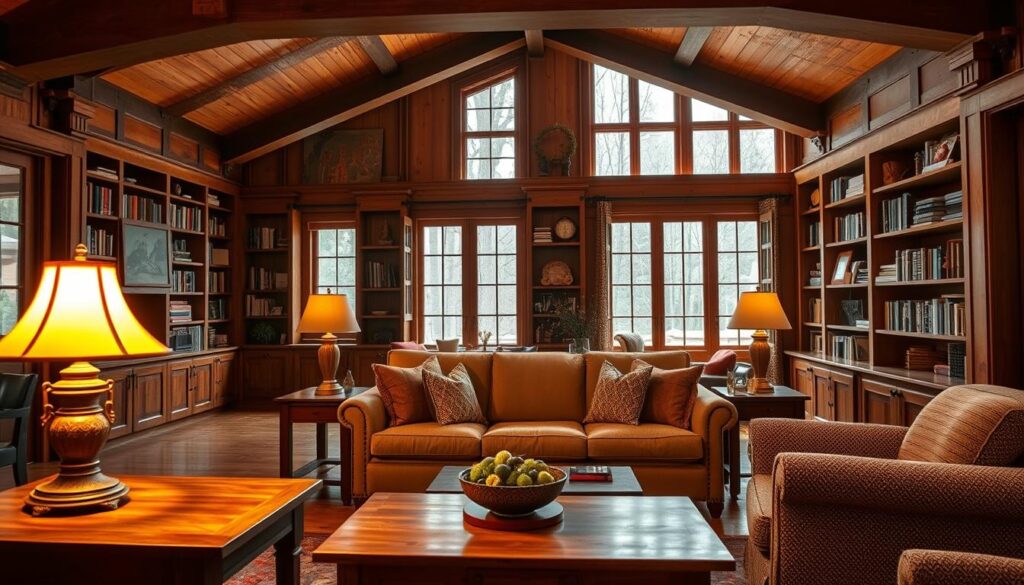
In Craftsman homes, lighting is more than just functional. It’s a key part of the style, showing off natural materials and craftsmanship. Good lighting brings out the woodwork, stone, and other details that make Craftsman interiors special.
Types of Lighting Fixtures
Craftsman interiors use many lighting fixtures for a layered look. You’ll find pendant lights, sconces, and table lamps. These not only light up the space but also add to its beauty.
Pendant lights can spotlight areas like kitchen islands or dining tables. Sconces warm up hallways and living rooms. Table lamps offer task lighting and add to the cozy feel of a room.
Utilizing Natural Light
Using natural light is key in Craftsman interiors. Big windows let in lots of light. Sheer window treatments help keep the light flowing without blocking it.
Placing mirrors opposite windows can bounce light deeper into the home. This makes rooms feel brighter and bigger. It also shows off the home’s craftsmanship and materials.
By mixing different lighting fixtures and using natural light, homes become warm, inviting, and beautifully lit. This showcases the Craftsman style’s unique charm.
Wall Treatments and Finishes
The walls of a Craftsman home are more than just a backdrop. They’re an opportunity to add character and depth. When renovating or designing a Craftsman interior, the choice of wall treatments and finishes is crucial. It’s key to capturing the essence of this classic style.
Popular Paint Colors
Craftsman homes are known for their warm, inviting interiors. The right paint color can enhance this ambiance. Earthy tones like sage green, sandy beige, and weathered wood are popular choices.
These colors complement the natural materials often used in Craftsman construction. They also create a soothing atmosphere. For a more traditional look, soft whites and creams can be used to highlight architectural features.
For inspiration on craftsman wall treatments, you can explore resources like Pinterest. It offers a variety of ideas and designs.
Wood Paneling Techniques
Wood paneling is another effective way to add warmth and texture to a Craftsman interior. Techniques such as wainscoting and the use of wood trim can create a sense of depth and character in a room. Wainscoting involves installing wooden panels on the lower portion of a wall, typically up to chair rail height.
This not only adds visual interest but also protects the walls from damage. For those looking to incorporate plantation-inspired elements into their home decor, exploring designs that blend traditional Craftsman elements with modern twists can be beneficial. Resources like holopoems.com offer insights into how different styles can be combined.
| Technique | Description | Benefits |
|---|---|---|
| Wainscoting | Wooden panels on lower wall portion | Adds texture, protects walls |
| Wood Trim | Decorative molding around doors, windows | Enhances architectural features |
| Paneling | Full or partial wall covering with wood | Creates warmth, visual interest |
By carefully selecting wall treatments and finishes, homeowners can enhance the classic charm of their Craftsman home. They can create a warm and inviting living space. This space reflects the style’s emphasis on natural beauty and craftsmanship.
Flooring Choices for a Craftsman Style
The flooring in a Craftsman home is more than just practical. It’s a key part in making the space warm and cozy. Homeowners should pick flooring that fits the Craftsman bungalow’s look.
Hardwood Flooring Options
Hardwood flooring is a must in Craftsman homes. It makes the space feel welcoming. Here are some popular hardwoods:
- Oak: Oak flooring is strong and has a distinct grain. It adds charm to any room.
- Maple: Maple flooring is great for a light, airy feel. It’s perfect for brightening up spaces.
- Hickory: Hickory flooring is tough and has unique patterns. It brings elegance to Craftsman interiors.
These hardwoods can be stained in many colors. This lets homeowners match the Craftsman style, from light to dark.
Area Rugs and Their Effect
Area rugs are key in a Craftsman home. They define spaces and add warmth. They can:
- Define different areas in open-plan spaces, creating separation without walls.
- Add color and texture, improving the look and tying design elements together.
- Provide comfort, making the space cozy, even on cold floors.
For a Craftsman home, choose rugs with traditional patterns and materials. Wool rugs with classic designs are great.
Craftsman Kitchen Design Elements
A Craftsman kitchen is more than a place to cook. It’s the heart of the home, filled with warmth and hospitality. It combines traditional craftsmanship, natural materials, and beauty with function.
Layout and Functionality
The layout of a Craftsman kitchen is key to its use. A good kitchen has a flow that makes cooking easy. This often includes a central island or peninsula for more counter space and storage.
The classic “work triangle” is still important. It connects the sink, stove, and fridge for better workflow. To make it work, add lots of storage with cabinets, drawers, and pantries. Using natural materials like wood makes the kitchen warm and inviting.
“A well-designed kitchen is not just about aesthetics; it’s about creating a space that functions seamlessly for the homeowner.” –
Cabinet Styles and Finishes
Cabinets are a key part of Craftsman kitchens. They often have raised-panel doors and drawer fronts from natural woods like oak, maple, or cherry. The finishes are warm and rich, showing off the wood’s grain.
- Think about shaker-style cabinets for a clean, simple look.
- Glass-front cabinets add elegance and let you show off your dishes.
- For a true Craftsman feel, choose custom cabinetry with detailed designs.
The style and finish of your cabinets greatly affect your kitchen’s look. Choosing cabinets that match the Craftsman style makes your kitchen welcoming and cohesive.
Unique Craftsman Bathroom Features
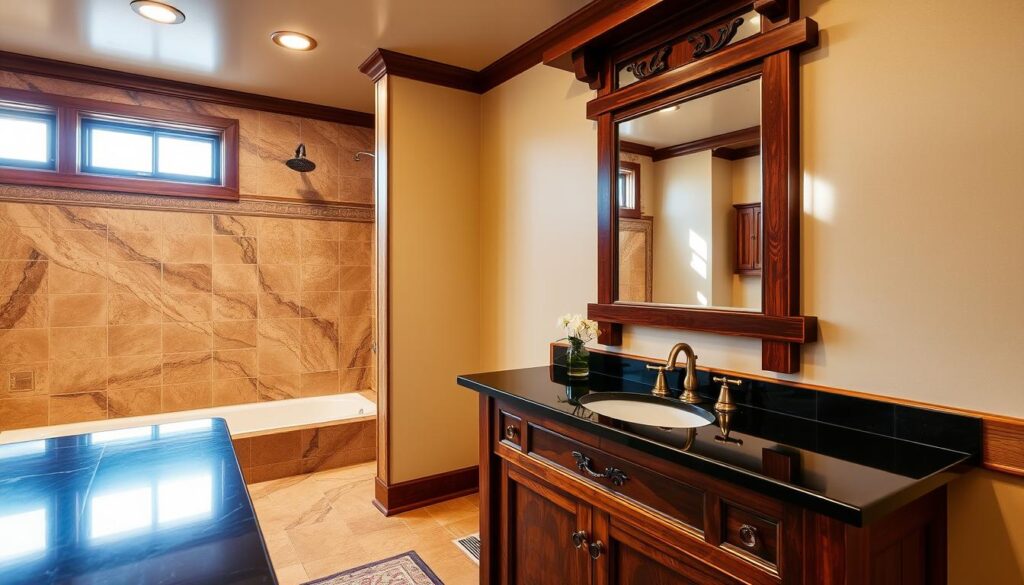
In a Craftsman home, the bathroom is a peaceful retreat. It often has beautifully crafted woodwork and classic tile designs. When renovating or decorating a Craftsman bathroom, it’s key to use elements that show the style’s love for natural materials and handcrafted details.
Vanity Styles
The vanity is a key feature in any bathroom, and in a Craftsman home, it’s no different. Natural wood finishes and decorative hardware are key to Craftsman vanity styles. Look for a vanity with a rich, stained wood finish and hardware with intricate details.
Shower and Tub Designs
Craftsman bathrooms often have clawfoot tubs, adding vintage elegance. For showers, think about handcrafted tile work or a glass-enclosed shower for luxury. Natural stone or decorative tile can also boost the bathroom’s look.
When renovating a Craftsman home, the bathroom is a great place to show off unique fixtures and design elements. By using craftsman home decorating tips like focusing on natural materials and handcrafted details, you can make a bathroom that feels both real and luxurious.
Incorporating Arts and Crafts Elements
To truly capture the essence of Craftsman style, it’s essential to incorporate Arts and Crafts elements. The Arts and Crafts movement, which emerged in the late 19th century, emphasizes the importance of handmade craftsmanship. It also focuses on integrating art into everyday life. This philosophy is reflected in Craftsman homes through the use of natural materials, handcrafted decor, and a focus on functionality.
One of the key ways to incorporate Arts and Crafts elements into your Craftsman home decor is through the use of handmade decor pieces. These can include items such as hand-thrown pottery, hand-woven textiles, and hand-carved wooden furniture. By incorporating these pieces, you not only add visual interest to your space but also pay homage to the craftsmanship that defines the Arts and Crafts movement.
Handmade Decor Pieces
Handmade decor pieces can range from functional items like kitchenware and furniture to decorative pieces such as wall hangings and sculptures. When selecting handmade decor, consider the materials and techniques used. For example, look for pieces made from natural materials like wood, clay, and cotton, and appreciate the craftsmanship that goes into each item.
Some popular types of handmade decor include:
- Hand-painted ceramics
- Hand-woven baskets
- Hand-carved wooden decorative items
Art Nouveau Influences
The Arts and Crafts movement was also influenced by Art Nouveau, a style characterized by its use of sinuous, organic lines and flowing curves. In Craftsman homes, Art Nouveau influences can be seen in the use of intricate metalwork, stained glass, and decorative woodwork. To incorporate Art Nouveau elements into your decor, consider adding decorative pieces with flowing lines and organic forms.
Here’s a comparison of key elements in Arts and Crafts and Art Nouveau styles:
| Style | Key Elements | Materials |
|---|---|---|
| Arts and Crafts | Handmade craftsmanship, natural materials, functionality | Wood, clay, cotton |
| Art Nouveau | Sinuous lines, organic forms, decorative metalwork | Metal, glass, wood |
By understanding and incorporating these elements, you can create a cohesive and beautiful Craftsman home decor. This decor reflects the principles of both the Arts and Crafts and Art Nouveau movements.
Outdoor Spaces and Craftsman Aesthetics
Outdoor areas are key in Craftsman home design. They blend with the inside to look cohesive. The Craftsman style aims for harmony with nature, and outdoor spaces help achieve this.
Porches and Entryways
Porches and entryways are key features of Craftsman homes. They connect the outdoors to the indoors. These areas are made to be welcoming and cozy, often with wooden columns, rafters, and decorative trusses that show off the era’s craftsmanship.
The porch is more than just a look; it’s an extra living area. Owners can add comfy seating, outdoor lights, and decor that matches the inside of the home.
Landscaping Ideas
Landscaping is vital for the Craftsman look. It uses native plants and traditional garden features that fit with the natural setting.
Some good landscaping ideas include:
- Choosing native plants that need little care and help local wildlife.
- Adding traditional garden elements like stone paths, wooden benches, and handmade planters.
- Keeping a consistent color and texture in both the landscaping and the home’s exterior.
| Landscaping Element | Description | Benefit |
|---|---|---|
| Native Plants | Plants naturally found in the region | Low maintenance, supports local ecosystem |
| Stone Pathways | Pathways made from natural stone | Durable, aesthetically pleasing |
| Wooden Garden Benches | Benches crafted from wood | Adds warmth, provides seating |
By designing porches, entryways, and landscaping well, homeowners can boost their Craftsman home’s look. This creates a welcoming and balanced living space.
Conclusion: Achieving a Cohesive Craftsman Home Style
Creating a stunning craftsman home interior is all about mixing old and new. We focus on natural materials and architectural details. This way, our home looks both timeless and modern.
To make our home look great, we can use several decorating tips. We choose furniture that’s comfy and useful. We also pick lighting that shows off our home’s beauty. And, we add handmade decor to make it personal.
By combining these elements, we create a craftsman home that’s both traditional and personal. It becomes a warm and welcoming space that reflects our style.