We are drawn to the elegance of the past, and Victorian-era homes are a testament to this allure. These homes have intricate details and expansive spaces. They continue to captivate us. The advancements in building technology and the expansion of railroads during the Victorian era enabled the construction of such elaborate interiors.
Exploring these historic homes, we find their interiors are not just beautiful but also tell a story. They show innovation and craftsmanship. The opulence on display is a result of the era’s technological progress, making these interiors truly unique.
By embracing the characteristics of Victorian decor, we can bring a touch of history into our modern living spaces. This blend of past and present creates a fascinating aesthetic. It is both nostalgic and contemporary.
Key Takeaways
- Victorian-era homes are prized for their historical significance and architectural beauty.
- Technological advancements and railroads played a crucial role in the construction of these homes.
- The interiors of Victorian homes are characterized by intricate details and expansive spaces.
- Embracing Victorian decor can add a touch of history to modern homes.
- The blend of Victorian and contemporary styles creates a unique aesthetic.
Overview of Victorian Architecture
The Victorian era lasted from the late 1830s to the early 1900s. It brought a unique architectural style that still fascinates many. This style started in England around 1840 and reached the United States by 1860. It evolved, influenced by new technologies and ideas.
Key Characteristics of Victorian Style
Victorian homes stand out with their eclectic and ornate characteristics. They often have asymmetrical designs and steep roofs. Towers are common too. The use of materials like brick, stone, and wood makes these homes visually appealing.
The Victorian style values detail and craftsmanship. You’ll find intricate woodwork, ornate plasterwork, and beautiful stained glass windows. These elements make Victorian homes truly special.
Common Architectural Elements
Victorian homes often have:
- Wraparound porches
- Turrets and towers
- Steep gables and complex rooflines
- Ornate woodwork and trim
- Stained glass windows
Popular Victorian Substyles
Over time, Victorian architecture branched out into several substyles. Some of the most well-known include:
| Substyle | Characteristics |
|---|---|
| Queen Anne | Asymmetrical facades, turrets, and ornate woodwork |
| Italianate | Rectangular or L-shaped plans, flat or shallow roofs, and ornate brackets |
| Second Empire | Mansard roofs, pavilions, and ornate detailing |
These substyles show the diversity and creativity of Victorian architecture. They reflect the era’s love for innovation.
The Charm of Victorian Interior Design
The Victorian interior design is special because it mixes luxury with elegance. It’s known for its grand and refined look. This makes it a favorite among homeowners who love timeless beauty.
Embracing Opulence and Elegance
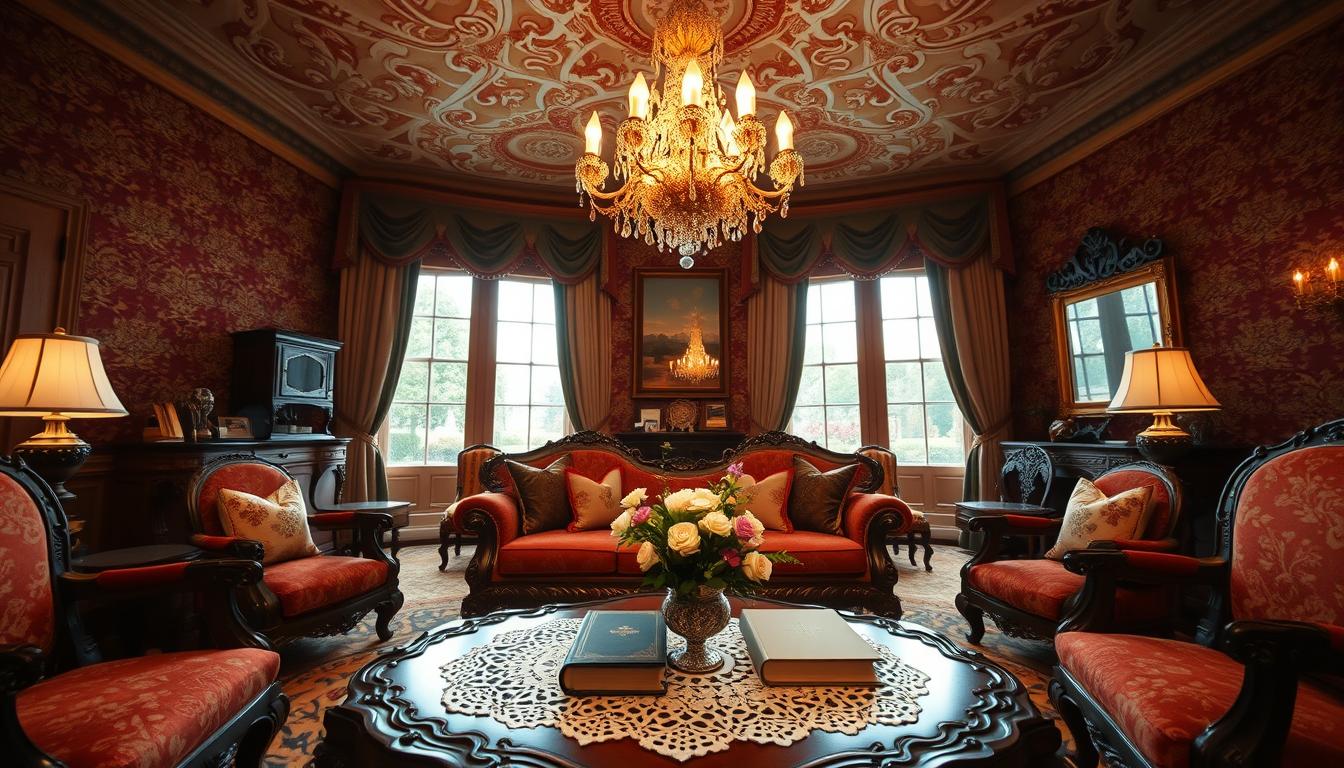
Victorian design is all about using fancy materials and detailed work. Stately dark wood furniture and luxurious gilt embellishments are key to its rich feel. To bring this into your home, think about:
- Choosing furniture in rich, dark wood tones
- Adding metallic touches like gold or brass
- Using intricate patterns in textiles and wallpaper
Importance of Detail and Craftsmanship
The Victorian era was all about quality craftsmanship. It’s known for its detailed designs. From carved wooden moldings to delicate fabric patterns, the focus on detail is unmatched. To get this in your home, focus on:
- Choosing furniture with detailed carvings
- Adding handmade or artisanal pieces
- Using textiles with complex patterns
By embracing Victorian design’s luxury, elegance, and focus on detail, you can make a unique and stunning space.
Color Palettes for Victorian Interiors
Choosing the right colors is key when renovating a Victorian home. These homes are known for their bold, rich colors. These colors help define the look of these historic homes.
The Victorian era, from the late 1830s to the early 1900s, saw a unique approach to color. Interiors often featured deep, rich hues. These colors showed the era’s opulence and the progress in dye and paint making.
Classic Victorian Color Schemes
Classic Victorian color schemes are complex and deep. You’ll find deep reds, blues, and greens, along with rich golds and creams. These colors were used in walls, furniture, and textiles, creating a luxurious atmosphere.
Some iconic Victorian color palettes include:
- Rich Jewel Tones: Emeralds, sapphires, and rubies added luxury to interiors.
- Earth Tones: Browns, tans, and siennas made spaces warm and inviting.
- Cream and Gold: These colors were used in moldings and furniture for elegance.
| Color Scheme | Description | Common Uses |
|---|---|---|
| Rich Jewel Tones | Deep, bold colors like emerald green and sapphire blue | Walls, furniture upholstery, and decorative accents |
| Earth Tones | Warm, natural colors such as brown and tan | Woodwork, flooring, and furniture |
| Cream and Gold | Soft creams and rich golds | Decorative moldings, trim, and luxury furniture |
How to Choose the Right Colors
Choosing colors for a Victorian home requires understanding the home’s style and era. Think about how you’ll use the space and the look you want.
For a vintage home decor look, follow these tips:
- Research the Era: Look at typical Victorian colors for inspiration.
- Consider the Architecture: Your home’s style can guide your color choices.
- Balance Bold Colors: Use bold colors sparingly to avoid overwhelming the space.
- Test the Colors: Always test paint samples on the walls before committing to a specific color.
By carefully picking a color palette that reflects Victorian style and meets your taste, you can create a beautiful Victorian interior.
Vintage Furniture and Decor
The Victorian era is famous for its lavish furniture and decor. These elements still inspire interior design today. To create a Victorian-style home, use vintage or vintage-inspired items that show the era’s grandeur.
Essential Furniture Pieces
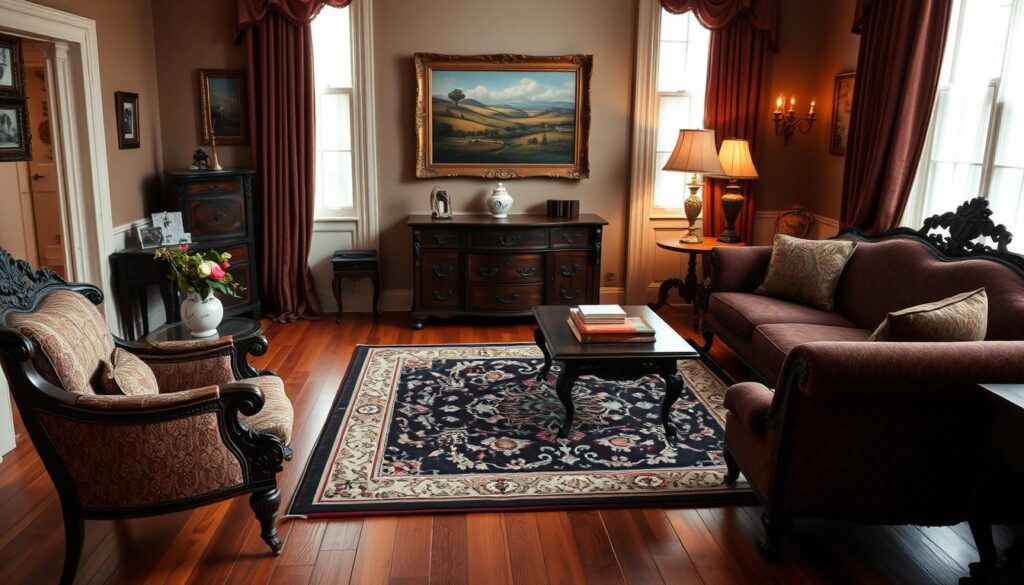
Victorian furniture is known for dark wood, detailed carvings, and curved lines. Key pieces include:
- Ornate Sofas and Armchairs: Find items with detailed carvings and rich fabrics like velvet or brocade.
- Monumental Furniture: Look for large wardrobes and dressers with ornate details.
- Tufted Upholstery: Tufted sofas and chairs bring elegance and sophistication.
Vintage Accessories to Enhance Your Space
Vintage accessories can also enhance your Victorian home. Consider adding:
- Chandeliers: Grand chandeliers add drama and elegance.
- Large Clocks: Mantel clocks and grandfather clocks were common, serving both function and decoration.
- Vintage Rugs: Richly patterned and colored rugs add warmth and depth.
Finding Authentic Victorian Decor
To find real Victorian decor, try these sources:
| Source | Description |
|---|---|
| Antique Shops | These shops specialize in vintage items, often carrying Victorian-era decor. |
| Estate Sales | Estate sales are great for finding vintage furniture and decor. |
| Online Marketplaces | Websites like eBay and Etsy have vintage and antique items, including Victorian decor. |
By using these vintage furniture pieces and accessories, you can make a Victorian-style home. It will be rich, inviting, and honor the past while being modern.
Flooring Choices in Victorian Homes
Victorian homes are known for their beautiful flooring. This flooring shows off the era’s love for detailed designs and top-notch materials. It was more than just a floor; it was a way to show off the homeowner’s style and status.
Popular Flooring Options
During the Victorian era, many flooring types were favored. Each had its own look and benefits.
- Parquet Flooring: Parquet flooring was a symbol of Victorian luxury. It used wood pieces to create stunning patterns.
- Hardwood Flooring: Hardwood, like oak, walnut, or pine, was also popular. It was durable and added warmth to rooms.
- Mosaic Flooring: Mosaic flooring, with its small tiles in patterns, was great for busy areas. It was both durable and beautiful.
Caring for Historic Flooring
Looking after historic flooring needs knowledge of the materials and the time they were made. Here are some tips to keep your Victorian home’s floors in top shape:
- Regular Maintenance: Sweeping and dusting often help keep floors clean and safe from damage.
- Refinishing: Hardwood and parquet floors can be refinished to look like new and protect them.
- Conservation: For mosaic or damaged floors, fixing or replacing tiles can help.
Knowing about Victorian flooring and how to care for it helps keep your home’s history and beauty alive.
Lighting: Setting the Ambiance
Lighting in Victorian homes is more than just turning on a switch. It’s about making a space feel elegant and sophisticated. The lights themselves are part of the decor, adding beauty to the room.
Ornate Lighting Fixtures
Victorian lighting is known for its detailed and grand designs. You’ll find:
- Chandeliers: These are often made from crystal or metal. They draw the eye up and add luxury to any room.
- Sconces: These wall-mounted lights are ornate and provide both light and decoration.
- Gas lamps: Though rare today, gas lamps bring a nostalgic feel to both indoor and outdoor spaces.
Layering Light for Ambiance
Layering light means using different sources to create a cozy atmosphere. This is key in Victorian homes, where the goal is to show off the decor’s beauty.
To layer light well, remember:
- Combine overhead lights, table lamps, and floor lamps for depth.
- Choose lights that match your furniture and decor.
- Change the light levels for different times and activities.
| Lighting Type | Purpose | Examples |
|---|---|---|
| Ambient Lighting | Provides overall illumination | Chandeliers, Ceiling Fixtures |
| Task Lighting | Illuminates specific areas for tasks | Table Lamps, Reading Lights |
| Accent Lighting | Highlights decorative elements | Sconces, Picture Lights |
Knowing about Victorian lighting and how to layer it helps create a welcoming space. Whether you’re fixing up a Victorian home or just inspired by it, good lighting design is essential. It brings the elegance of Victorian times into your home.
Textiles and Fabrics
Textiles were key in Victorian interior design, showing the era’s love for luxury and detail. Rich fabrics and intricate patterns were hallmarks, adding depth and opulence to rooms.
Patterns and Textures in Victorian Design
Victorian design is known for its rich patterns and textures. Velvet, silk, and embroidered textiles were used. They added visual interest and luxury.
Florals, stripes, and geometric motifs were common patterns. Fabrics like velvet and silk were popular for their luxurious feel.
Choosing Upholstery and Drapery
Choosing upholstery and drapery for a Victorian home is key. It’s important to match the furniture style and home era. Traditional Victorian design often had ornate and patterned fabrics.
For upholstery, pick durable yet luxurious fabrics like velvet or high-quality cotton with patterns. Drapery should be opulent, with silk or embroidered fabrics being great choices. Mixing textures and patterns adds depth and interest.
By choosing the right textiles, homeowners can create beautiful and authentic Victorian interiors. Whether restoring a historic home or just inspired by the era, the right fabrics make a big difference.
Modernizing Victorian Interiors
Updating a Victorian home is about blending its rich history with today’s needs. We aim to keep its charm while adding modern touches for better function and comfort.
Balancing Tradition with Contemporary Style
To update a Victorian interior, we must first appreciate its traditional aspects. Victorian design is known for detailed work, deep colors, and fancy furniture. We should add modern touches that respect these classic features.
- Keep original architectural details like moldings and woodwork.
- Add modern furniture with simple designs and less decoration.
- Use a neutral color scheme to highlight both old and new pieces.
For more ideas on updating old designs, check out 1960s homes interior retro chic trends. They offer great tips on mixing old styles with new ones.
Smart Home Innovations in Historic Homes
Adding smart home tech to Victorian homes can make them more livable without losing their historical charm. Here are some tips:
- Smart Lighting: Use smart bulbs that can be controlled from afar. This lets you change brightness and color without touching the original lights.
- Heating and Cooling: Install smart thermostats that learn your habits. They adjust heating and cooling for you, keeping the original radiators or heaters.
- Home Security: Improve security with smart locks, cameras, and sensors. These can be checked on phones, keeping the house’s look unchanged.

Creating a Cohesive Look
To make your home look beautiful, it’s key to have a unified style. This means picking items that match the Victorian era and your home’s style. Look at everything from the building’s design to the small decor pieces.
Unified Aesthetic Tips
Highlight your home’s architectural details with paint. This keeps the colors light and consistent. For example, a black balustrade can be a standout, while soft grey on walls creates a nice contrast.
In living areas, use floating shelves and custom cabinets around fireplaces. This helps keep the look cohesive. Adding built-in wardrobes with shaker-style panels and gold knobs can also enhance the overall look.
Finding Inspiration
For fans of Victorian design, there’s plenty of inspiration out there. Check out antique shops, historic homes, and design magazines. Websites like My Bespoke Room offer great Victorian decor ideas.
Also, look at Holopoems for elegant Victorian home decor ideas. These can spark your creativity for your interior design project.