Colonial style decor is a favorite among interior designers. It’s loved for its mix of different periods and places. This makes it a great choice for homeowners wanting to add elegance to their homes.
There’s a growing interest in colonial style decor. It’s a nice change from the minimalism that’s been popular lately. By using colonial style decor, homeowners can make their homes feel warm and elegant.
Key Takeaways
- Colonial style decor is a versatile and timeless choice.
- It offers a unique blend of elements from different periods and locations.
- This style is a refreshing contrast to minimalism.
- Colonial decor can create a warm and inviting atmosphere.
- It’s a popular choice among interior designers and homeowners.
Understanding Colonial Home Interior Design
Colonial home interior design is rooted in history and tradition. These homes are known for their classic look and elegant feel. They hold a special place in American history and are still loved today.
Overview of Colonial Design Characteristics
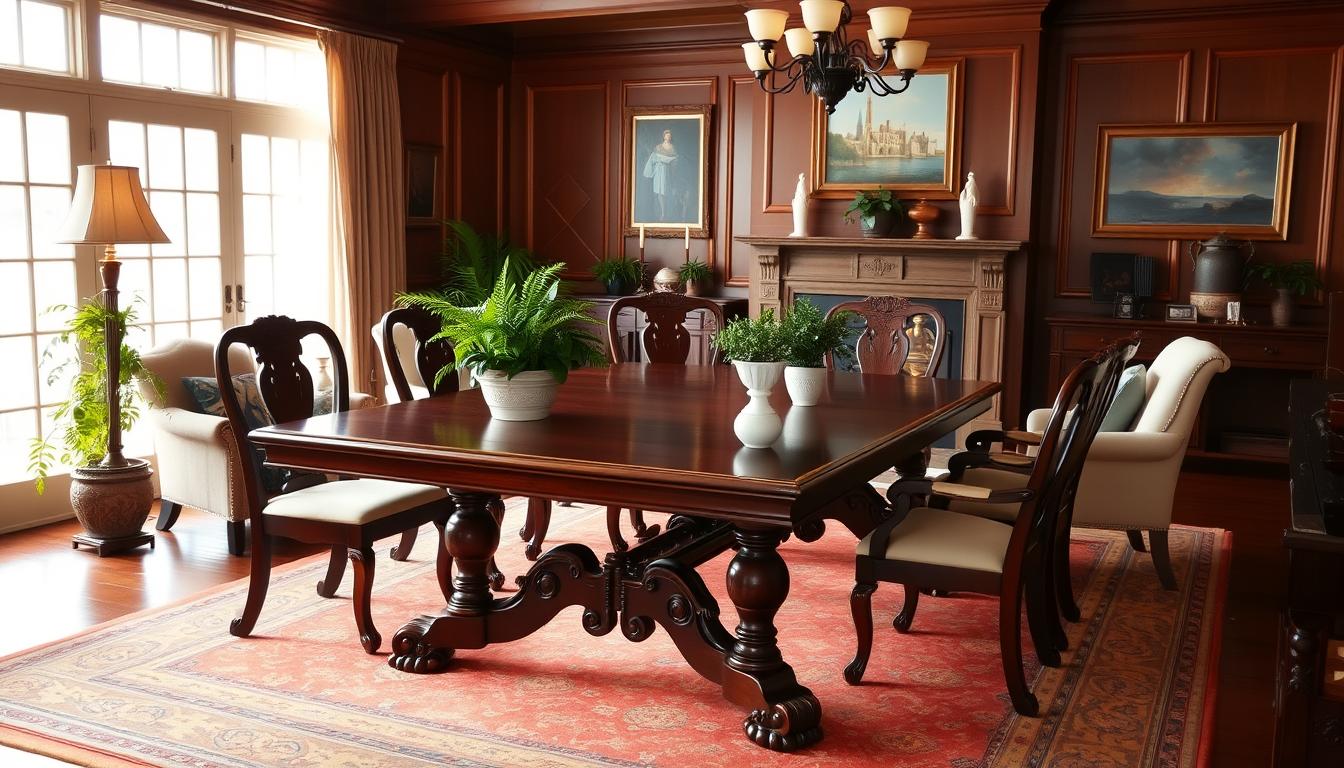
Colonial design focuses on symmetry and classic looks. It often has symmetrical layouts and architectural elements that show its historical roots. Homes of this style use rich wood tones, classic color palettes, and traditional textiles to feel warm and welcoming.
If you want to add colonial style to your home, check out British Colonial homewares. They offer great ideas for traditional furnishings and decor.
Key Historical Influences on Colonial Decor
Colonial decor was shaped by many cultures. European settlers brought their design traditions, including furniture and color schemes. For example, Georgian and Federal styles are common in colonial homes, known for their classical details.
Colonial decor also meets the practical needs of early American homes. Furniture was made to be functional and long-lasting. Knowing these historical influences helps create authentic colonial interiors that respect the past and meet today’s needs.
Essential Features of Colonial Home Interiors
Colonial home interiors are known for their symmetrical layouts, classic colors, and special materials. These features come together to make a space feel both timeless and welcoming.
Symmetrical Layouts and Architectural Elements
Symmetry is a key part of colonial style decor. It shows in room layouts, furniture placement, and architectural details like doorways and windows. Symmetrical balance brings a sense of calm and order, making spaces feel serene and organized.
Classic Color Palettes and Textures
Colonial interiors often use muted colors like neutral tones, earthy shades, and soft pastels. Beige, ivory, ochres, and greens are common, creating a soothing atmosphere. For more ideas, check out our guide to colonial home interior design.
Textures are also important, focusing on natural materials like wood, linen, and cotton. These add depth and warmth, making the space feel more inviting.
| Color | Texture | Material |
|---|---|---|
| Beige | Smooth | Linen |
| Ivory | Rough | Wood |
| Ochre | Soft | Cotton |
Signature Materials in Colonial Design
Signature materials are a hallmark of colonial interiors. Wood, like oak and pine, is often used for furniture and paneling, adding warmth. Brick, stone, and metal are also used to bring a sense of history and authenticity.
By using these key features, homeowners can create a colonial-style home that feels both historic and welcoming. Whether you’re restoring a period property or just want to capture the colonial look, these elements will help you achieve a timeless and elegant interior.
Popular Colonial Architectural Styles
From Georgian to Dutch Colonial, many architectural styles have shaped colonial homes. These styles reflect the historical times and add to the timeless beauty of colonial design.
Georgian: The Quintessential Colonial Style
The Georgian style is known for its symmetry and classical details. Symmetry is a hallmark of Georgian architecture, with balanced facades and evenly spaced windows and doors. It features decorative elements like pilasters and pediments, enhancing its charm.
Georgian homes are rectangular with a central front door. They often have decorative crowns or ornaments. The use of brick or stone makes these homes solid and permanent.
Federal: Elegance in Simplicity
Federal style homes are elegant and simple. They emerged as a response to the more ornate Georgian style. Simple yet elegant facades, often with a central portico or pilasters, define the Federal style.
The Federal style includes fanlights above doors and sidelights alongside. This adds to the elegance. The overall effect is understated sophistication, making Federal homes a classic choice.
Dutch Colonial: Unique Rooflines and Design
Dutch Colonial homes have unique gambrel roofs. These roofs have two slopes, with the lower slope steeper than the upper. This design adds space in the attic or second floor, making Dutch Colonial homes practical and charming.
The Dutch Colonial style features flared eaves and a gambrel roof with a flared or curved shape. The use of brick, stone, or clapboard siding adds to their rustic charm. Dutch Colonial homes are a favorite among many.
Choosing the Right Colonial Color Scheme
The color palette of a colonial-style home is key. It brings a sense of history and tradition. When picking colors, think about traditional colonial hues and how to use accent colors well.
Traditional Colors for Colonial Homes
Colonial homes often use neutral and earthy tones. These colors reflect the history of colonial architecture. They also offer a timeless look that fits many decorating styles.
- Neutral Shades: Beige, cream, and off-white are common in colonial decor. They create a clean, serene background for other design elements.
- Earth Tones: Brown, taupe, and moss green add warmth and coziness. They remind us of the natural settings of old colonial homes.
- Soft Pastels: Soft pastel shades like pale blue and soft pink add elegance. They show the influence of European design.
Accent Colors to Enhance Design
Accent colors are vital in a colonial color scheme. They add depth and interest to the space. Choosing the right accent colors can make a room feel welcoming and harmonious.
- Rich Jewel Tones: Emerald green, navy blue, and ruby red make great accent colors. They add a luxurious touch.
- Warm Metals: Brass, bronze, or copper add sophistication. Use them in hardware, lighting, or accessories.
- Natural Textiles: Linen, cotton, or wool in traditional patterns add color and texture. They enrich the design.
By following these tips, homeowners can create a colonial color scheme that’s both authentic and beautiful. It captures the essence of traditional colonial style decor.
Furniture Styles for Colonial Interiors
To make a colonial interior look authentic, choose furniture that matches the period’s styles and materials. Colonial homes are known for their classic elegance. The furniture is key to achieving this timeless look.
Period Furniture: What to Look For
When picking furniture for your colonial home, look for pieces that remind you of the 18th century. Rustic and vintage designs are common in colonial decorating. For example, living rooms often have display cabinets, bookshelves, and sideboards. Bedrooms usually have wooden canopy beds with linen curtains or rustic desks.
Some key features of period furniture include:
- Use of solid woods like oak, maple, and cherry
- Ornate carvings and intricate details
- Classic shapes and proportions
| Furniture Piece | Characteristics | Materials |
|---|---|---|
| Wooden Canopy Bed | Ornate carvings, four-poster design | Solid wood (oak, maple) |
| Display Cabinet | Glass doors, intricate hardware | Wood, glass |
| Rustic Desk | Simple design, distressed finish | Solid wood (pine, cherry) |
Modern Twists on Classic Colonial Pieces
While traditional furniture is essential for colonial interiors, adding modern twists can bring sophistication. You can update classic pieces with new upholstery or reimagined designs. This keeps the original style alive. For inspiration, check out plantation-inspired home decor design.
Here are some ways to modernize colonial furniture:
- Using contemporary fabrics for upholstery
- Incorporating modern hardware or lighting
- Simplifying or reinterpreting classic designs
By mixing period furniture with modern touches, you can create a colonial interior that’s both historically rich and modern.
Lighting Options in Colonial Decor
In colonial-style homes, lighting is more than just a need. It’s a way to add beauty and warmth. The right lights can make a home feel cozy and welcoming.
Colonial homes use different lights to create a balanced look. Let’s look at the lighting options that make colonial decor special.
Chandeliers and Wall Sconces
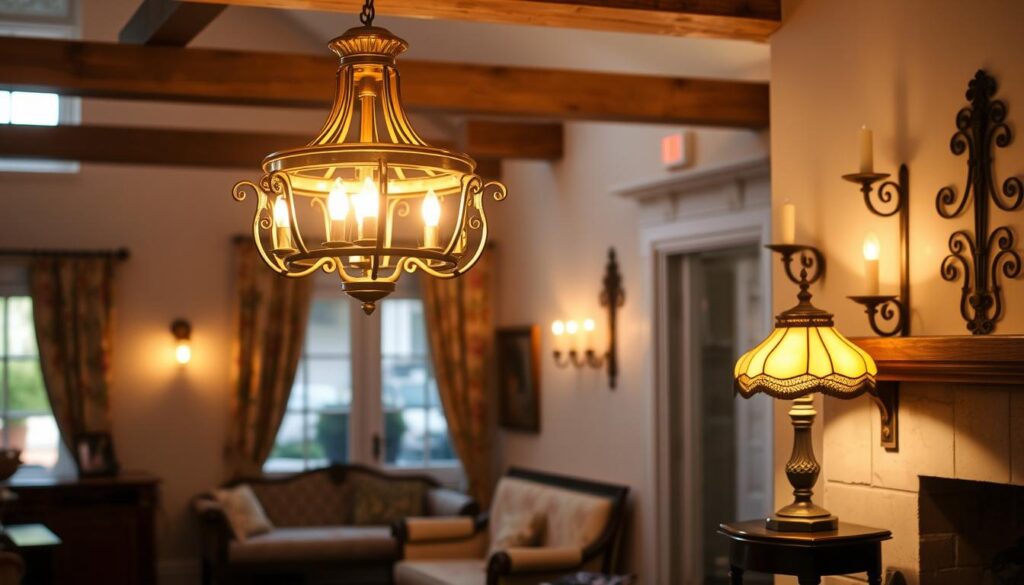
Chandeliers and wall sconces are key in colonial homes. They light up the space and add to the home’s look. These fixtures match the traditional feel of the home.
Chandeliers in these homes are often big and fancy. They’re made of materials like crystal, brass, or wood. You’ll find them in places like the living room or dining area.
Wall sconces add soft light. They’re in hallways, bedrooms, and other places where more light is needed.
Natural Light: The Role of Windows
Natural light is very important in colonial decor. Big windows are a key feature of colonial homes. They let in lots of sunlight, making artificial lights less needed during the day.
Windows in colonial homes are not just for light. They also make the home look better and feel more welcoming. Let’s see the types of windows you’ll find in these homes.
| Window Type | Description | Characteristics |
|---|---|---|
| Double-Hung Windows | Classic window style with two movable sashes. | Timeless, versatile, easy to clean. |
| Casement Windows | Hinged on one side, opening outward. | Excellent ventilation, unobstructed views. |
| Palladian Windows | Large, multi-paneled window with a central arched section. | Elegant, adds architectural interest. |
By using these lighting options, homeowners can make a colonial-style home. It will be warm, inviting, and true to traditional design.
The Importance of Textiles in Colonial Design
In colonial design, textiles are more than just functional items. They are the heart of the style’s traditional charm. Fabrics, patterns, and upholstery are key in defining the look of colonial home interior design.
Fabrics and Patterns that Define the Style
Colonial interiors feature high-quality fabrics like linen, silk, and cotton. These materials often come in classic patterns such as florals, geometrics, and stripes. These patterns add to the classic elegance of the space.
The choice of fabric greatly affects a room’s ambiance. For example, linen is valued for its durability and natural texture. Silk brings a touch of luxury. Cotton, being versatile and comfortable, is often used for upholstery and bedding.
| Fabric | Characteristics | Common Uses |
|---|---|---|
| Linen | Durable, natural texture | Upholstery, curtains |
| Silk | Luxurious, smooth | Draperies, accent pillows |
| Cotton | Versatile, comfortable | Upholstery, bedding |
Upholstery Ideas for a Colonial Feel
Upholstery is crucial in traditional home furnishings for colonial design. To get a colonial feel, use classic patterns like floral motifs or stripes on sofas and armchairs. Rich, muted colors can also enhance the traditional ambiance.
When picking upholstery, balance pattern and texture. For instance, a bold floral pattern with a solid-colored fabric can make a space inviting and harmonious.
By carefully choosing textiles for your design, you can create a cohesive and authentic colonial interior. This reflects the timeless elegance of this classic style.
Incorporating Colonial Artwork and Accessories
Artwork and accessories are key in colonial home decor. They connect the past with today. When picking items, think about the unique art of the colonial era.
Artwork Inspirations from Colonial Times
The colonial era was full of artistic heritage. Many influences shaped its decor. Here are some key inspirations:
- Antique Maps: Maps from the colonial era can add a sense of history and adventure to your walls.
- Vintage Prints: Prints of landscapes, botanicals, and other subjects were popular during the colonial period and can bring a touch of elegance to your decor.
- Traditional Ceramics: Ceramics, such as those produced by early American potters, can serve as beautiful decorative pieces or functional items.
These artwork inspirations not only reflect the colonial era’s aesthetic. They also enhance your home’s ambiance.
Accessorizing with Period-Appropriate Decor
Accessories are vital in completing the colonial look in your home. To get an authentic feel, consider these:
- Period Furniture: Incorporate furniture pieces that are either original to the colonial era or styled after period pieces.
- Textiles: Use fabrics and patterns that were popular during the colonial period, such as cotton prints and woolen textiles, to add warmth and authenticity.
- Lighting Fixtures: Chandeliers and sconces that mimic colonial-era designs can significantly enhance the ambiance of your space.
By carefully choosing artwork and accessories that reflect the colonial style, you can make your home feel both historic and welcoming.
Creating an Inviting Colonial Living Room
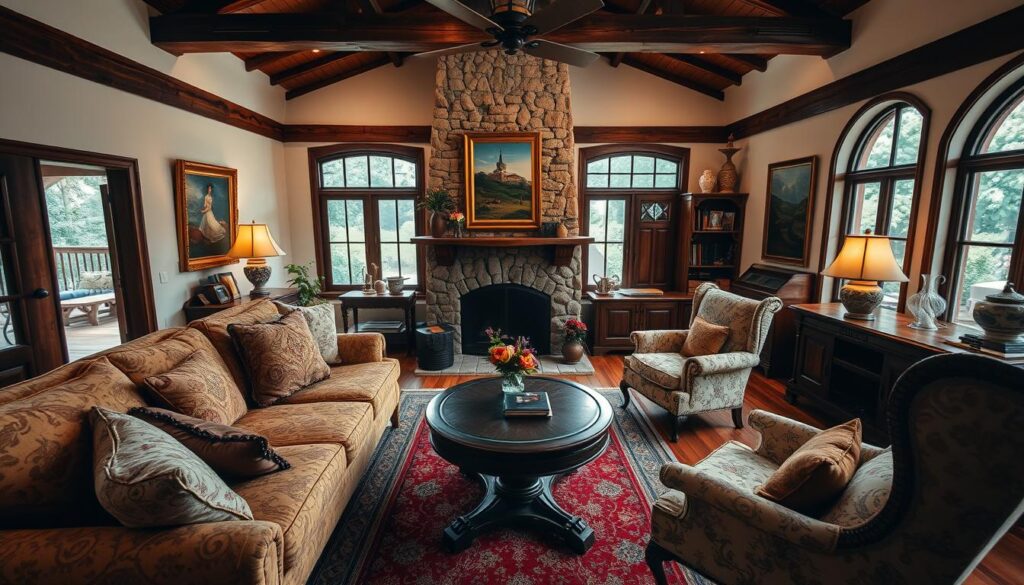
To make a colonial living room inviting, it’s key to know its design traits. Colonial-style living rooms are known for their classic elegance and warmth. They are a favorite among homeowners. A well-designed colonial living room mixes traditional elements with comfort and function.
Layout Tips for Comfort and Functionality
A colonial-style living room often has a symmetrical layout. This layout adds to its sense of order and harmony. Here are some layout tips:
- Place furniture in a balanced arrangement around a central focal point, such as a fireplace.
- Use traditional furnishings, like Queen Anne or Chippendale-style pieces, to add authenticity to your space.
- Incorporate comfortable seating options, such as wingback chairs or a classic sofa, to ensure functionality.
By focusing on symmetry and traditional furnishings, you can make a colonial living room both beautiful and functional.
Choosing the Right Focal Points
The focal point of your living room greatly affects its ambiance. In colonial-style homes, fireplaces are often central. Here are some tips for choosing the right focal points:
- Highlight a fireplace with a decorative mantel and surrounding decor.
- Use a statement piece of furniture, like a vintage armoire, as a focal point.
- Consider the role of architectural elements, such as built-in shelving or crown molding, in creating visual interest.
By carefully selecting your focal points, you can boost the colonial charm of your living room. This creates a warm, inviting atmosphere.
Designing Cozy Colonial Bedrooms
The colonial bedroom style mixes traditional furnishings with a calming atmosphere. It’s key to find a balance between old charm and today’s comfort.
Essential Furniture for a Colonial Bedroom
Colonial bedrooms often have wooden canopy beds and rustic desks. These items bring history and function. Choose furniture made from solid woods like oak, maple, or cherry for a true colonial look.
Don’t forget other key pieces like dressers, nightstands, and chests. They should be ornate but simple, showing the elegance of colonial design.
Color and Texture Considerations
Colonial bedrooms are known for soft colors and textures. Walls can be painted in soft whites, creams, or gentle blues. These colors make the room calm and let darker furniture stand out.
Textures add depth to the room. Use bedding, curtains, and upholstery to mix textures. For example, a plush area rug warms the floor, while linen or cotton bedding makes the bed cozy.
Choosing the right furniture, colors, and textures makes a cozy colonial bedroom. It’s inviting and true to the period-inspired interiors you want.
Outdoor Spaces in Colonial Design
Outdoor spaces in colonial design are key, not just an afterthought. They show the style and sophistication of the colonial era. These areas are designed to match the home’s architecture, blending indoors and outdoors smoothly.
In colonial home renovation, outdoor spaces are vital. They add to the vintage home decor. Elements like landscaping, garden design, and furniture create a welcoming atmosphere, evoking the colonial era.
Landscaping Elements and Garden Design
Colonial outdoor spaces often have formal gardens and traditional landscaping. These gardens have symmetrical layouts, neat hedges, and plants from the colonial period.
“A garden is a love song, a duet between a human being and Mother Nature.” – Jeff Cox
In colonial gardens, plants like boxwood, roses, and herbs are used for a classic look. Brick or stone pathways, ornate furniture, and decorative ornaments add to the charm.
| Landscaping Element | Description |
|---|---|
| Symmetrical Layouts | Formal gardens with balanced designs |
| Traditional Flora | Use of plants popular during the colonial era |
| Brick or Stone Pathways | Classic materials used for garden paths |
Choosing Colonial-Style Outdoor Furniture
Outdoor furniture in colonial homes has classic designs and traditional materials. It’s important to pick furniture that matches the colonial look.
Key Features of Colonial-Style Outdoor Furniture:
- Classic designs inspired by 18th-century furniture
- Use of traditional materials such as wood, wrought iron, and cast aluminum
- Ornate details and carvings that add to the colonial charm
By using these elements, homeowners can make outdoor spaces beautiful and true to colonial design. Whether renovating a colonial home or adding colonial charm, these tips will help achieve a timeless look.
Final Thoughts on Colonial Home Decor
Exploring colonial home interior design shows us its timeless appeal. This classic style fits well in today’s homes. By using traditional elements like symmetrical layouts and classic colors, we can make our homes welcoming and unique.
Timeless Elegance in Modern Homes
Mixing colonial style with modern homes needs careful thought. We can blend old and new by combining period furniture with modern touches. This mix brings elegance from the past into our daily lives.
Personalizing Colonial Design
Adding personal touches makes a colonial home truly special. Using family heirlooms, antique pieces, or meaningful art adds character. This personalization respects the colonial style while making the home our own.