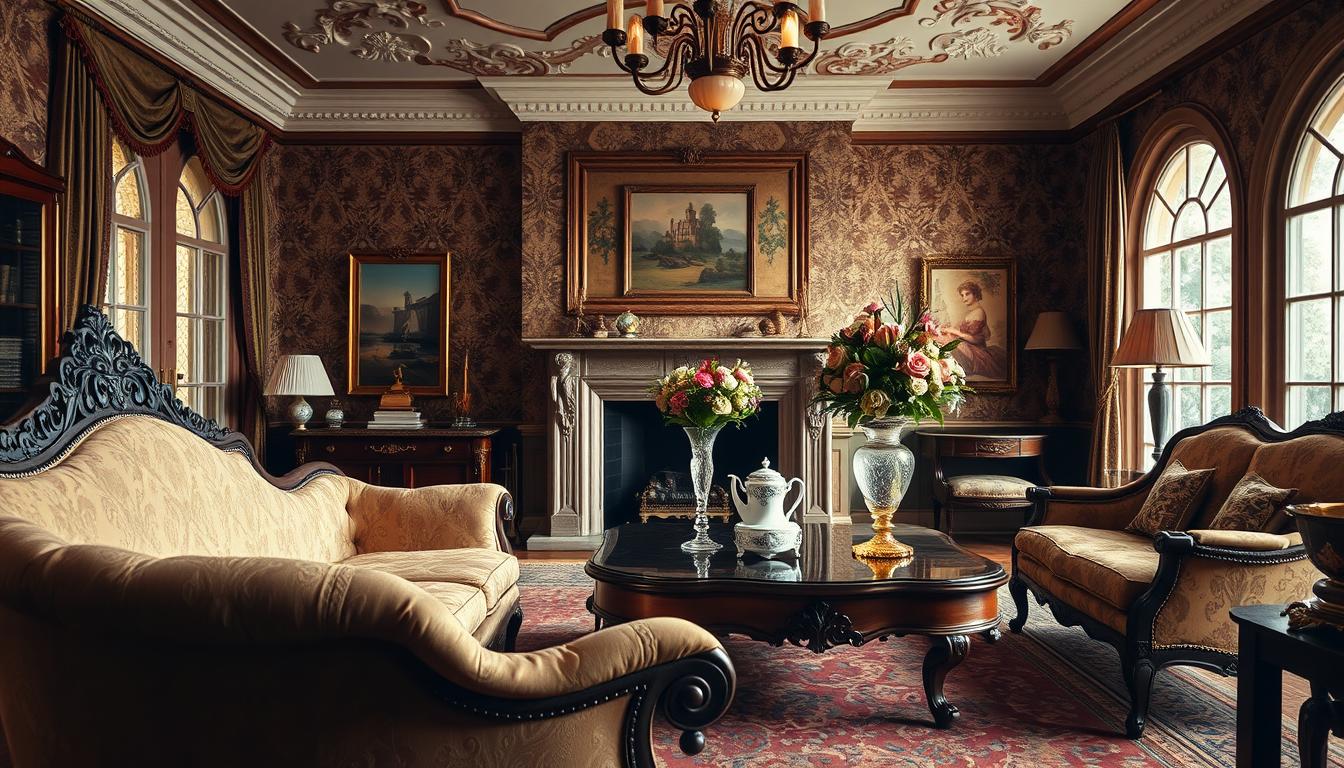
Did you know that adding Victorian style decor to your home can make it look better and increase its value? Victorian interior design is known for its elegance and sophistication. It’s a classic choice for elegant Victorian interiors.
We can turn any room into a luxurious retreat by using Victorian design’s classic elements. It’s all about intricate patterns, rich colors, and ornate furnishings. Victorian home interiors show off a sense of refinement and poise.
Key Takeaways
- Understand the basics of Victorian interior design
- Learn how to incorporate Victorian style decor into your home
- Discover the key elements that make Victorian interiors elegant
- Explore how to balance classic Victorian elements with modern tastes
- Create a luxurious retreat with Victorian-inspired furnishings
Understanding Victorian Home Interiors
Exploring Victorian home interiors means diving into the era’s history. The Victorian time, from the late 1830s to the early 1900s, saw big changes in culture, society, and economy. These changes greatly influenced how homes were decorated.
The Industrial Revolution was booming, making mass production possible. This changed how homes looked. The era’s focus on historical home decor and period home design led to homes full of detail and decoration.
Historical Context of Victorian Design
The Victorian era was named after Queen Victoria, who ruled from 1837 to 1901. Her time saw a comeback in architectural and decorative styles like Gothic Revival and Italianate. These styles made Victorian home interiors unique, with a mix of intricate patterns, rich colors, and ornate furnishings.
“The Victorian home was a reflection of the owner’s status and taste, with interiors that were often elaborate and ornate.”
Understanding Victorian design’s history helps grasp the evolution of classic home interior styles. The era’s love for decoration and mix of historical styles made homes beautiful and told stories of the time’s culture and values.
Key Characteristics of Victorian Interiors
Victorian interiors are known for their luxury and detail. Some key features include:
- Rich, bold color schemes
- Intricate patterns and textures
- Ornate furnishings and decorative items
- Use of luxurious materials such as velvet, silk, and mahogany
| Characteristic | Description |
|---|---|
| Color Schemes | Rich, bold colors such as emerald green, navy blue, and crimson red |
| Patterns and Textures | Intricate patterns including florals, stripes, and damask; textures like velvet and silk |
| Furnishings | Ornate pieces with carvings, gilded details, and plush upholstery |
Knowing these traits helps in creating a classic home interior that honors the Victorian era yet fits today’s tastes.
Color Palettes That Define Victorian Style
The Victorian era is famous for its lavish interior designs. Colors play a key role in this style. The right colors can take you back in time, showing the grandeur of Victorian homes.
In victorian style decor, colors are very important. They can make or break the look. Traditional Victorian decorating mixes rich, bold colors with softer tones.
Rich and Bold Colors
Victorian design loves deep, rich colors like burgundies, emeralds, and royal blues. These colors were paired with neutral tones for balance. To add these colors to your home, use them as accent walls or statement pieces, like a bold-colored sofa or vintage-inspired furniture.
Soft Pastels and Earth Tones
On the other hand, soft pastels and earth tones were used for a softer, more romantic feel. These colors bring warmth and coziness. Use soft pastel shades on walls or in textiles, like curtains or upholstery, for a vintage look.
Understanding Victorian color palettes helps create an elegant and inviting space. Whether you like bold colors or soft pastels, balance them with neutral tones. This avoids overwhelming your senses.
Furniture Styles in Victorian Homes
Victorian furniture is known for its detailed carvings and plush upholstery. The Victorian era loved luxury and detail. This led to furniture that was both useful and beautiful.
Victorian furniture is marked by intricate carvings, luxurious fabrics, and detailed woodwork. These features made each piece unique and showed off the era’s wealth.
Intricately Carved Wood Pieces
One key feature of Victorian furniture is its intricate wood carvings. These carvings often had floral patterns and scrollwork. They added beauty to the furniture.
When choosing Victorian-style furniture, look for detailed carvings and rich wood tones. These will help make your space look authentic and Victorian.
Upholstered Furniture Trends
Upholstered furniture was big in Victorian homes. They used velvet, silk, and other fancy fabrics. This made the furniture both cozy and eye-catching.
To add Victorian-style upholstered furniture to your home, pick pieces with bold patterns and rich colors. They will bring elegance and character to your space.
Textiles and Fabrics: The Victorian Touch
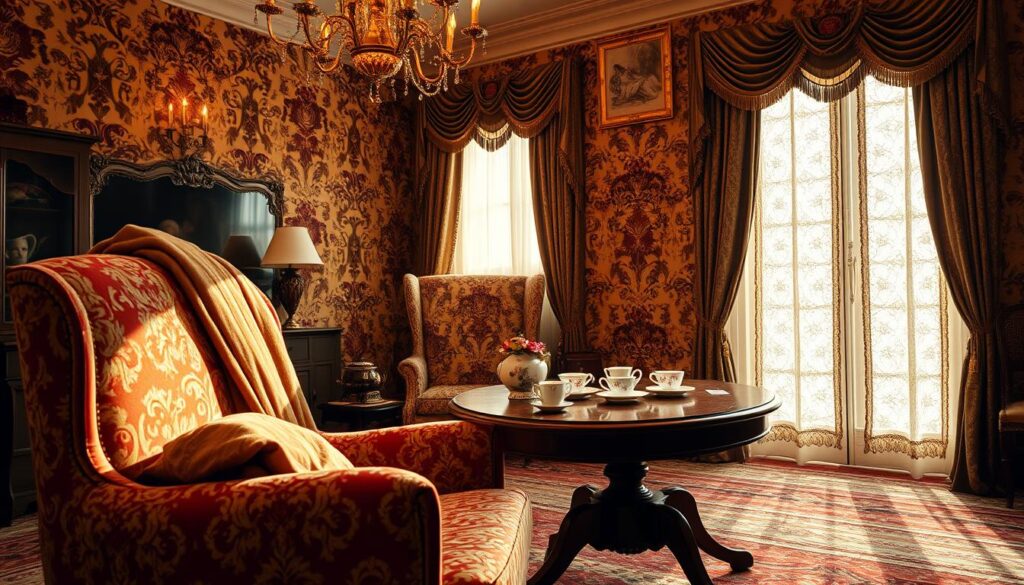
The Victorian style is known for its rich fabrics like velvet, silk, and brocade. These luxurious materials were used in Victorian homes for upholstery, curtains, and throw pillows. They added opulence and sophistication to the interiors.
Choosing the right textiles is key to creating a Victorian-inspired space. Velvet was a favorite for its soft, plush pile. Silk was popular for its lustrous finish and durability. Brocade added visual interest with its intricate patterns.
Velvet, Silk, and Brocade
These fabrics were chosen for their beauty and feel. Velvet, silk, and brocade each offered a unique sensory experience. When picking fabrics for your Victorian space, think about the texture and how it will feel.
Patterns and Prints to Consider
Victorian design often featured floral patterns, damask, and geometric designs. These patterns could be used alone or mixed with plain fabrics for a layered look.
To get the Victorian look right, balance patterns and textures. Start with a main pattern or fabric, then add complementary elements. For example, a velvet sofa with a floral pattern can be paired with silk curtains and brocade throw pillows.
| Fabric | Characteristics | Common Uses |
|---|---|---|
| Velvet | Soft, plush pile; luxurious feel | Upholstery, drapery |
| Silk | Lustrous finish; durable | Curtains, upholstery |
| Brocade | Intricate patterns woven into the fabric; textured | Throw pillows, wall hangings |
By carefully choosing and combining these textiles, you can create a Victorian-inspired space. Whether you’re restoring a historic home or just inspired by the era, the right fabrics make a big difference.
Importance of Architectural Details in Victorian Design
The beauty of Victorian design comes from its detailed architectural elements. These details make a home look beautiful and keep its history alive.
Features like wainscoting, dado rails, and decorative moldings are key to Victorian design. They add luxury and character to a Victorian home, setting it apart from others.
Classic Woodwork and Moldings
Classic woodwork and moldings are key to elegant Victorian interiors. The detailed carvings and patterns in these wooden features bring depth and elegance to a room. To add these to your home, consider the following:
- Restoring original woodwork to its former glory
- Using period-appropriate materials for repairs and replacements
- Adding decorative moldings to ceilings and walls
By adding classic woodwork and moldings, you can make your Victorian home’s historical home decor even more special.
Unique Ceiling Designs
Victorian ceilings are often overlooked but they can really make a room stand out. Unique ceiling designs, like rose centers or intricate plasterwork, can greatly improve a room’s feel.
| Ceiling Design Feature | Description | Period Design Element |
|---|---|---|
| Rose Center | A decorative plaster feature at the center of the ceiling | Ornate plasterwork |
| Coved Ceilings | Ceilings with a curved profile, often featuring intricate molding | Classic woodwork |
| Tray Ceilings | Ceilings with a recessed section, often decorated with molding or plasterwork | Decorative molding |
Adding these unique ceiling designs to your home can make it look authentic and interesting. It’s a great way to enhance your interior spaces.
Lighting Fixtures That Enhance Victorian Decor
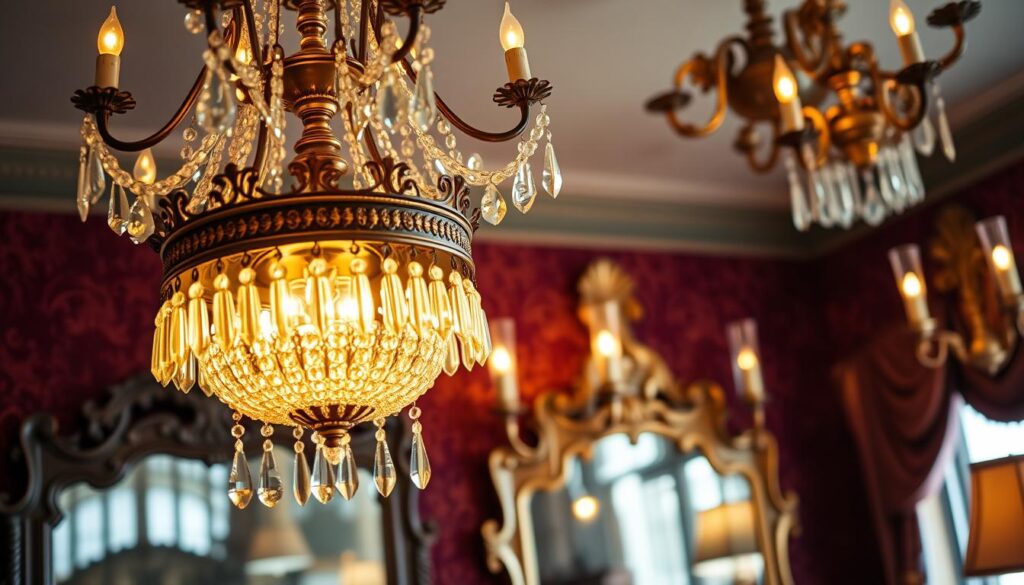
The right lighting can turn your space into a stunning Victorian-inspired interior. Chandeliers and wall sconces are not just useful; they also add to the decor. They can make your home feel like a Victorian mansion.
When picking lighting, think about the style and era you want. Victorian decor is all about luxury and detail. So, choose fixtures that show these qualities.
Chandeliers and Wall Sconces
Chandeliers and wall sconces are key to Victorian lighting. Chandeliers, with their fancy details, can be a room’s centerpiece. Wall sconces offer a softer light, making spaces feel cozy and welcoming.
Decide between chandeliers and wall sconces based on your room’s size and lighting needs. Big rooms look great with a grand chandelier. Smaller spaces might prefer the elegance of wall sconces.
Gaslight Inspirations
Gaslight-inspired lighting is also great for a Victorian feel. These fixtures have detailed metalwork and a classic look. They bring a real Victorian vibe to your decor.
Gaslight inspirations work well indoors and outdoors. They offer a versatile lighting option that fits the Victorian style perfectly.
| Lighting Fixture | Description | Best Used In |
|---|---|---|
| Chandeliers | Ornate, multiple arms, grand | Larger rooms, dining areas |
| Wall Sconces | Subtle, elegant, soft lighting | Smaller rooms, corridors |
| Gaslight Inspirations | Intricate metalwork, classic design | Outdoor spaces, indoor areas for authenticity |
By choosing and using these lighting fixtures wisely, you can make a warm and inviting Victorian-inspired space. It will show off your personal style beautifully.
Modern Touches in Victorian Interior Design
Mixing Victorian design with modern elements creates a unique space. We love the elegance of Victorian home interiors. Now, we’re adding modern touches that show our lifestyle.
Combining old and new decor is key. For example, Victorian furniture with modern art or lights is stunning. It keeps the Victorian charm but adds a modern twist.
Mixing Contemporary Elements
Adding modern touches to Victorian homes needs careful thought. Choose pieces that fit with the old architecture but don’t take over. For instance, adding modern Victorian interiors can be as simple as using new textiles with old furniture.
Lighting is another area to update. Modern lights, like sleek pendant lights, can change a room. They make the space more functional and interesting.
Reimagining Spaces for Today’s Living
Updating Victorian homes for today means more than just looks. It’s about making spaces work better for us. Traditional Victorian decorating often had formal rooms, which don’t fit our open layouts.
To fix this, open up the space by removing walls or using sliding doors. Adding smart home tech also makes your Victorian home more comfortable and easy to use.
By adding modern touches and changing the layout, you get the best of both worlds. Your Victorian home stays charming but feels modern and functional.
Maintaining Authenticity in Victorian Renovations
Renovating a Victorian home requires careful thought to keep its original charm. It’s not just about keeping history alive; it also makes the home look better.
To do this right, start by researching historical accuracy. Knowing your home’s history helps you make smart choices during the renovation. Look into the styles, materials, and building methods of the Victorian era.
Researching Historical Accuracy
Here are some steps to research historical accuracy:
- Learn about your home’s history, including its original design and any changes over time.
- Look at old photos and architectural plans.
- Get advice from experts in Victorian architecture.
For more tips on Victorian home renovations, check out our resource page.
Sourcing Period-Appropriate Materials
Finding the right materials is key to keeping your Victorian home true to its roots. This means:
- Choosing traditional materials like wood, stone, and brick.
- Adding decorative touches popular in the Victorian era, like detailed moldings and fancy fixtures.
- Picking materials that match what your home was originally made with.
By focusing on historical accuracy and using the right materials, your Victorian renovation will be both genuine and stunning. This way, you keep your home’s history alive and make it even more beautiful and valuable.
Tips for Decorating Your Victorian Home
Decorating a Victorian home needs careful thought to mix luxury and comfort. We learn that Victorian style decor is about making a space beautiful and functional.
Creating a Harmonious Balance
To find this balance, we can blend traditional Victorian decor with modern elements. Rich textures and bold colors can be balanced with neutral pieces to avoid feeling too much. Adding vintage interior design items, like antique furniture or rugs, brings depth and character to our home.
Adding Personal Touches
Adding our own touches with vintage finds makes our Victorian home special. We can look for unique pieces in antique shops, estate sales, or online. Mixing these vintage items with traditional Victorian decor makes our space both true to its roots and uniquely ours.
By using these tips, we can make a Victorian-inspired home that’s both beautiful and practical. It showcases the beauty of Victorian style decor and vintage interior design.